

Elevate Your Home Bar: Decanters, Purpose & Style
Many collectors and home bar enthusiasts assume a decanter is a flavor upgrade in glass form. It isn’t, at least not for spirits. The truth is more interesting. A well-chosen decanter is part ritual, part sculpture, and part social signal. It tells your guests something about your taste before a single pour is made. This guide cuts through the noise on what decanters actually do, when they matter functionally, and how to choose pieces that make your bar genuinely unforgettable. Whether you’re building a curated collection or searching for the perfect gift, what follows will sharpen your eye and your instincts.
Table of Contents
- What does a decanter actually do?
- Aesthetic value: How decanters elevate your home bar
- Practical considerations: Decanting and serving wine and spirits
- Collectors and entertaining: Choosing the perfect decanter
- Our perspective: The real role of decanters in today’s home bar
- Complete your experience with elegant barware and accessories
- Frequently asked questions
Key Takeaways
| Point | Details |
|---|---|
| Primary value is visual | Decanters mainly enhance your home bar’s look and make entertaining feel more special. |
| Wine benefits, spirits less so | Decanting improves the taste of most wines, but for spirits, use is largely aesthetic. |
| Short-term use for spirits | Store spirits long-term in their original bottles; decanters are ideal for serving at events. |
| Choose for style and function | Select decanters that complement your decor, offer a tight seal, and match your entertaining style. |
What does a decanter actually do?
A decanter is a vessel, typically glass or crystal, used to hold and serve wine or spirits. That simple definition hides a more layered story, because the reasons you’d use one differ completely depending on what’s inside it.
For wine, decanting is a functional act. Pouring wine into a wide-bottomed decanter exposes it to oxygen, which opens aromas and softens tannins in red wines and separates sediment from older bottles. A Barolo or aged Bordeaux can genuinely transform in the glass after 30 to 60 minutes of breathing. The chemistry is real and the results are noticeable.
For spirits, the story shifts. Whiskey, bourbon, and scotch offer minimal aeration benefit when moved to a decanter. The flavor profile of a well-aged spirit is largely locked in by the time it leaves the barrel and bottle. Unlike wine, spirits don’t have live tannins waiting to soften or sediment to separate. The decanter here is about presence, not chemistry.
| Feature | Wine decanting | Spirits decanting |
|---|---|---|
| Primary purpose | Aeration and sediment removal | Aesthetic presentation |
| Flavor impact | Significant for reds, mild for whites | Minimal to none |
| Ideal vessel shape | Wide base, narrow neck | Varies, often angular or sculptural |
| Time sensitivity | 20 to 60 minutes optimal | Not time-sensitive |
| Storage suitability | Short-term only | Short-term preferred |
This doesn’t mean decanting spirits is pointless. Far from it. The act of pouring a fine bourbon from a hand-blown crystal decanter carries weight. It signals intention. It slows the ritual down in a way that a standard bottle simply cannot.
“A decanter’s role with spirits is almost entirely visual and ceremonial. It transforms the act of serving into a moment worth noticing.”
For those who enjoy Whiskey Barrel Aged expressions, pairing them with a striking decanter adds a layer of theater to every pour. The spirit earns its presentation.
Key takeaways on decanter function:
- Wine: real flavor and aroma benefits, especially for aged reds
- Spirits: primarily visual and ceremonial value
- Both: enhanced sense of occasion for guests
Aesthetic value: How decanters elevate your home bar
Historically, decanters for spirits were used to showcase color and clarity, removing any cloudiness and displaying the liquid’s beauty. That tradition lives on, but today’s premium decanters do something even more powerful. They anchor the visual identity of your bar.
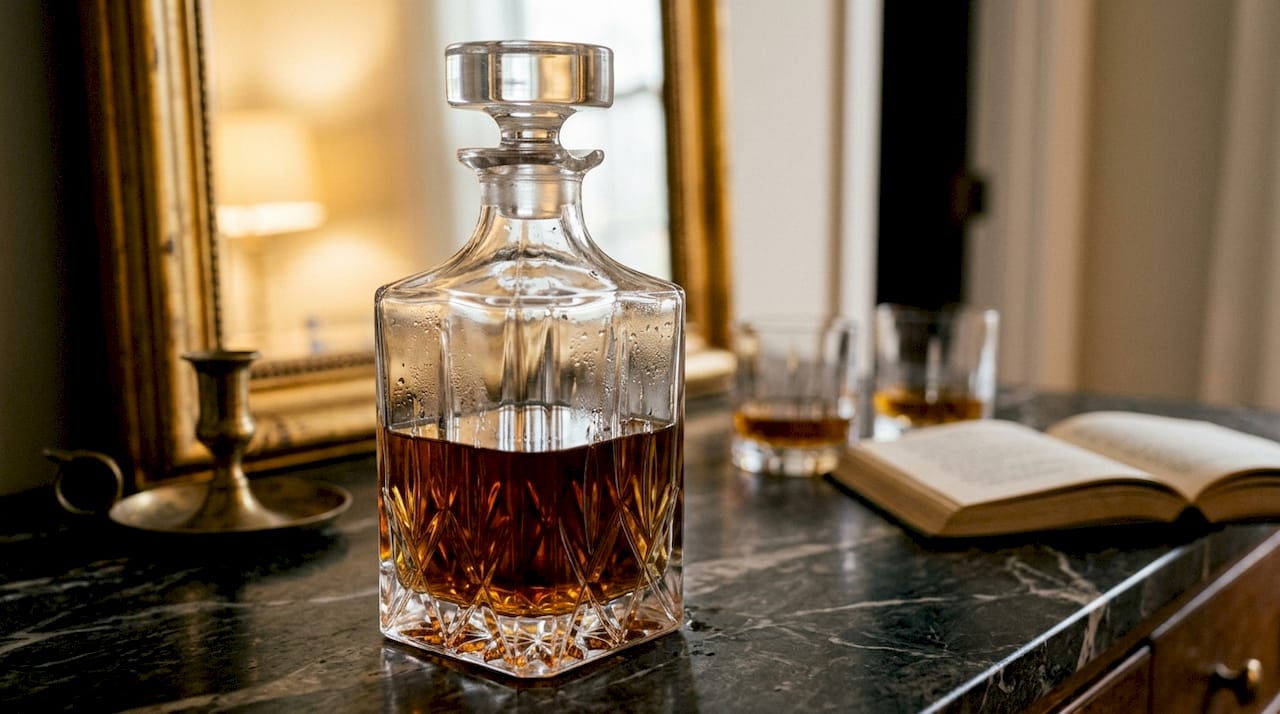
Think about the difference between a bar shelf lined with mismatched bottles and one where a single sculptural decanter sits at center, flanked by matched glassware. The second version communicates curation. It says the host has thought carefully about every detail.
Ways a premium decanter elevates your home bar:
- Creates a unified, intentional aesthetic across your bar setup
- Serves as a conversation piece that guests notice immediately
- Signals luxury and care without a word being spoken
- Complements matched glassware for a cohesive, editorial look
- Transforms the act of serving into a small ceremony
- Doubles as art on display, even when not in use
Collector-grade decanters, particularly hand-cut crystal or limited-edition pieces, carry their own provenance. They’re not just vessels. They’re objects with stories, and those stories enrich every gathering.
Pro Tip: Pair your decanter with glassware from the same design family. A geometric decanter with angular tumblers creates a sharp, modern look. A rounded, hand-blown piece pairs naturally with stemware that shares its organic quality. Cohesion is the mark of a truly considered bar.
For seasonal entertaining, a piece like the Holiday Blend collection can anchor a bar setup that feels intentional and celebratory. The right accessories don’t just hold drinks. They hold the mood of the evening.
The ritual of uncorking or unstoppering a decanter in front of guests is also worth considering. It slows the moment. It invites attention. In a world where everything moves fast, that pause is genuinely luxurious.
Practical considerations: Decanting and serving wine and spirits
Great style is nothing without practical advice. Here’s how to decant with confidence, and when to skip it entirely.
Decanting wine step by step:
- Stand the bottle upright for at least an hour before opening to let sediment settle
- Open gently and pour slowly into a clean, dry decanter in one steady motion
- Stop pouring when you see sediment approaching the bottle neck
- Allow the wine to breathe for 20 to 60 minutes depending on age and variety
- Serve at the appropriate temperature and rinse the decanter promptly after use
Decanting whiskey or bourbon for entertaining:
- Pour your chosen spirit into the decanter shortly before guests arrive
- Use a decanter with a tight-fitting stopper to limit oxygen exposure
- Serve within one to two days for best results
- Return any remainder to the original bottle for longer storage
| Beverage | Decanting recommended? | Notes |
|---|---|---|
| Aged red wine | Yes | Aerate 30 to 60 minutes |
| Young red wine | Yes, briefly | 15 to 20 minutes max |
| White wine | Sometimes | Delicate whites benefit minimally |
| Whiskey/bourbon | Short-term only | Aesthetic use, consume within days |
| Gin or vodka | No | No benefit, skip entirely |
| Cask-strength whiskey | No | Higher oxidation risk |
On storage: spirits oxidize faster in decanters than in sealed bottles, so while an airtight decanter can preserve spirits for months, the original bottle is always the better long-term home. The same logic applies to fragile old wines, which should be decanted at the last possible moment before serving.
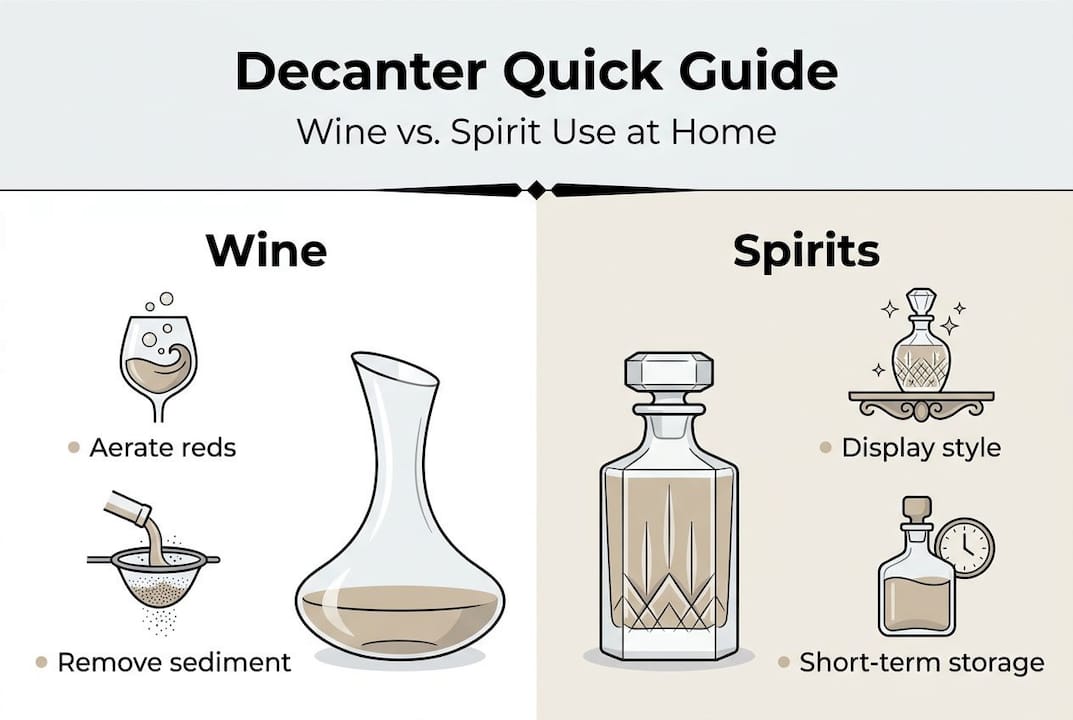
Pro Tip: For rare or expensive spirits, use an inert gas spray (commonly used in wine preservation) inside the decanter before stoppering. This displaces oxygen and significantly slows oxidation without affecting flavor.
Two things to always avoid: storing spirits in lead crystal, as lead can leach into the liquid over time, and decanting clear spirits like gin or vodka or high-proof expressions, which gain nothing and risk more.
When NOT to decant:
- Clear spirits (gin, vodka, white rum)
- Cask-strength or very high-proof whiskeys
- Delicate, very old wines that may fall apart with too much air
- Any spirit you plan to store for more than a few days
Collectors and entertaining: Choosing the perfect decanter
With the details of use in mind, it’s time to choose the perfect decanter tailored to your lifestyle and home bar goals.
The market ranges from functional glass decanters under $50 to hand-crafted crystal collector pieces worth several hundred dollars or more. The right choice depends on how you plan to use it, display it, and whether you’re buying for yourself or as a gift.
Key features to evaluate when choosing a decanter:
- Shape and capacity: Wide-base designs suit wine; angular or tall forms suit spirits
- Stopper seal: A tight, well-fitted stopper is non-negotiable for spirits
- Material: Lead-free crystal offers brilliance and safety; borosilicate glass is durable and affordable
- Brand provenance: Established makers carry collector value and consistent craftsmanship
- Decorative value: Consider whether the piece works as a display object when empty
- Ease of cleaning: Narrow necks can trap residue; choose shapes you can actually maintain
On the crystal vs. glass question: lead-free crystal is the gold standard for collectors. It refracts light beautifully, feels substantial in the hand, and signals quality to anyone who picks it up. Standard glass is perfectly functional for everyday use but lacks the visual drama of crystal.
For collectors, think about rotation and display. A single statement decanter on a lit bar shelf draws the eye. A rotating collection, with different pieces appearing for different occasions, adds a layer of storytelling to your entertaining. For long-term storage, always return spirits to their original bottles. Decanters are for the event, not the archive.
As gifts, decanters punch above their weight. They’re personal without being too personal, visually impressive, and carry a clear message about the giver’s taste. A collector-grade piece paired with a curated spirit or a set of matched glasses becomes a gift that genuinely stands out.
The no empirical standard for taste improvement in spirits means your choice is free from obligation. Buy what moves you. Choose what fits your bar’s visual language. Let the piece earn its place through beauty and use, not chemistry.
For those building a cohesive collection, pairing a decanter with pieces from the Holiday Blend range creates a bar that feels considered from every angle.
Our perspective: The real role of decanters in today’s home bar
The debate over whether decanters improve the taste of spirits misses the point entirely. Wine gets a clear scientific benefit from aeration. Spirits, largely, do not. Both of those facts are true. Neither one settles the question of whether a decanter belongs on your bar.
Here’s what we believe after years of working with collectors and hosts at every level: the ritual matters. The act of decanting, of choosing the right vessel, of presenting a spirit or wine with intention, changes the experience for everyone in the room. Not because the liquid is different. Because the moment is.
Hospitality has always been about more than what’s in the glass. It’s about how you make people feel when you hand it to them. A beautiful decanter is part of that language. It says you care about the details. It says this gathering was worth preparing for.
Do what brings you joy and fits your space. Let the ritual elevate your next gathering.
Complete your experience with elegant barware and accessories
Ready to bring your vision to life? The right decanter is only the beginning.
At The Gilded Cup, we curate premium drinkware, glassware, and accessories for collectors and hosts who refuse to compromise on quality. Whether you’re pairing a statement decanter with a Whiskey Barrel Aged expression, building a seasonal bar setup around the Holiday Blend collection, or searching for a gift that genuinely impresses, we have the pieces to complete your vision. Every item is chosen for craftsmanship, beauty, and lasting value. Discover more glassware and find the finishing touches that make your home bar truly unforgettable.
Frequently asked questions
Does using a decanter change the taste of whiskey or bourbon?
For most whiskeys and bourbons, decanting does not significantly change the taste. Experts recommend original bottles for long-term storage, as the primary benefit of a decanter is presentation and ritual.
How long can I keep spirits in a decanter?
Spirits can be kept for months in airtight decanters, but oxidation alters flavor over time, so short-term use for entertaining is strongly preferred over extended storage.
Should you decant white wine or just reds?
Most reds benefit clearly from decanting, while some whites may open up with brief aeration. Reds get the greatest benefit and are the primary reason wine decanters exist.
Is it safe to use lead crystal decanters?
No. Avoid lead crystal for spirits storage, as lead can leach into the liquid during extended contact. Always choose lead-free crystal or glass for spirits.
What types of spirits should not be decanted?
Clear spirits like vodka or gin and high-proof or cask-strength whiskeys gain no benefit from decanting and are more vulnerable to oxidation when removed from their original bottles.