

What is bespoke drinkware? Luxury, craft, and personalization
Most people assume that adding a monogram to a whiskey glass makes it bespoke. That assumption undersells the entire concept. True bespoke drinkware refers to high-end, custom-made drinking vessels tailored through genuine collaborative design, not a laser-etched name on a stock tumbler. For collectors and affluent buyers who care about what sits on their home bar, the distinction matters enormously. This guide breaks down exactly what bespoke means in the drinkware world, how the creation process works, and why it commands a different category entirely from personalized or mass-produced alternatives.
Table of Contents
- Defining bespoke drinkware: Beyond personalization
- Why collectors and connoisseurs seek bespoke pieces
- The bespoke process: Collaboration and craft
- Bespoke vs. personalized vs. mass-produced: What sets them apart?
- Our perspective: Bespoke drinkware as artistry and legacy
- Explore bespoke-inspired options with The Gilded Cup
- Frequently asked questions
Key Takeaways
| Point | Details |
|---|---|
| True bespoke defined | Bespoke drinkware is custom-designed and made to order, not just engraved or personalized. |
| Luxury is collaboration | High-end pieces involve a hands-on design process between client and artisan for true exclusivity. |
| Collectors value uniqueness | Affluent buyers seek bespoke for its artistry, status symbolism, and storytelling potential. |
| Invest in craftsmanship | Choosing bespoke means prioritizing artisan process, top-tier materials, and lasting appeal over mass production. |
Defining bespoke drinkware: Beyond personalization
The word “bespoke” originates from London’s Savile Row tailoring tradition, where a suit was “bespoken” or fully spoken for by a single client before a single stitch was sewn. In drinkware, the philosophy is identical. It is about creating something that did not exist before you commissioned it, shaped by your vision and brought to life by a skilled artisan.
“Bespoke drinkware is not just engraved glass. True bespoke involves collaborative custom design and one-of-a-kind creation.”
So what does that actually look like in practice? A genuinely bespoke piece might involve:
- Custom molds created specifically for a client’s desired silhouette
- Material selection from hand-blown crystal to fine ceramics or rare metals
- Collaborative sketches and prototypes refined through multiple review rounds
- Artisan techniques such as gilding, sandblasting, or mouth-blowing applied by hand
- Unique finishing details like bespoke color glazes, inlaid precious metals, or custom etchings
This is fundamentally different from buying a pre-made glass and adding initials. Engraving is a finishing touch. Bespoke is a creation process.
The category covers a wide range of vessels. Glasses, tumblers, decanters, barware sets, pitchers, and serving pieces all qualify when they go through a true bespoke process. Even ceramics like mugs fall within the bespoke world when they are shaped, glazed, and fired to a client’s exact specification. A Black Glossy Mug or a White Glossy Mug designed around a specific color story and finish is far closer to the bespoke spirit than an off-the-shelf piece with an added name.
The problem today is marketing inflation. Brands use “bespoke” loosely to describe anything with a customization checkbox at checkout. Serious collectors know the difference. Real bespoke requires your involvement in the design, not just your name on the side. A Mug With Color Inside, chosen for its interior contrast and crafted with specific color intent, represents the kind of thoughtful design selection that edges toward genuine bespoke thinking, even when the investment sits at an accessible level.
The hallmark of bespoke is always this: the object would not exist in that exact form without you.
Why collectors and connoisseurs seek bespoke pieces
Collectors do not pursue bespoke drinkware simply because it is expensive. The motivation runs deeper than price tags.
Exclusivity is part of it. Owning something that no one else in the world has, something that carries your creative fingerprint, satisfies a need that purchasing a limited-edition bottle or a designer bag simply cannot. For ultra-high-net-worth individuals, the appeal lies in process involvement rather than mere acquisition.
“Bespoke elevates home bars via exclusivity and craftsmanship, blending tradition with personalization, and contrasts mass-produced pieces by emphasizing the uniqueness of every creation.”
Heritage houses reinforce this desire. Names like Murano glassmakers and Riedel carry centuries of craft tradition. Collectors drawn to these brands understand that the techniques involved, hand-blowing, lead-free crystal shaping, and controlled kiln firing, produce results that machine manufacturing cannot replicate. The irregularities in a hand-blown piece are not flaws. They are signatures.
Beyond status, collectors think about legacy. A bespoke decanter commissioned to mark a milestone, a wedding anniversary, a significant business achievement, or a personal collection milestone, becomes an heirloom. It holds a story. Mass-produced pieces, however beautifully designed, cannot carry that narrative weight.
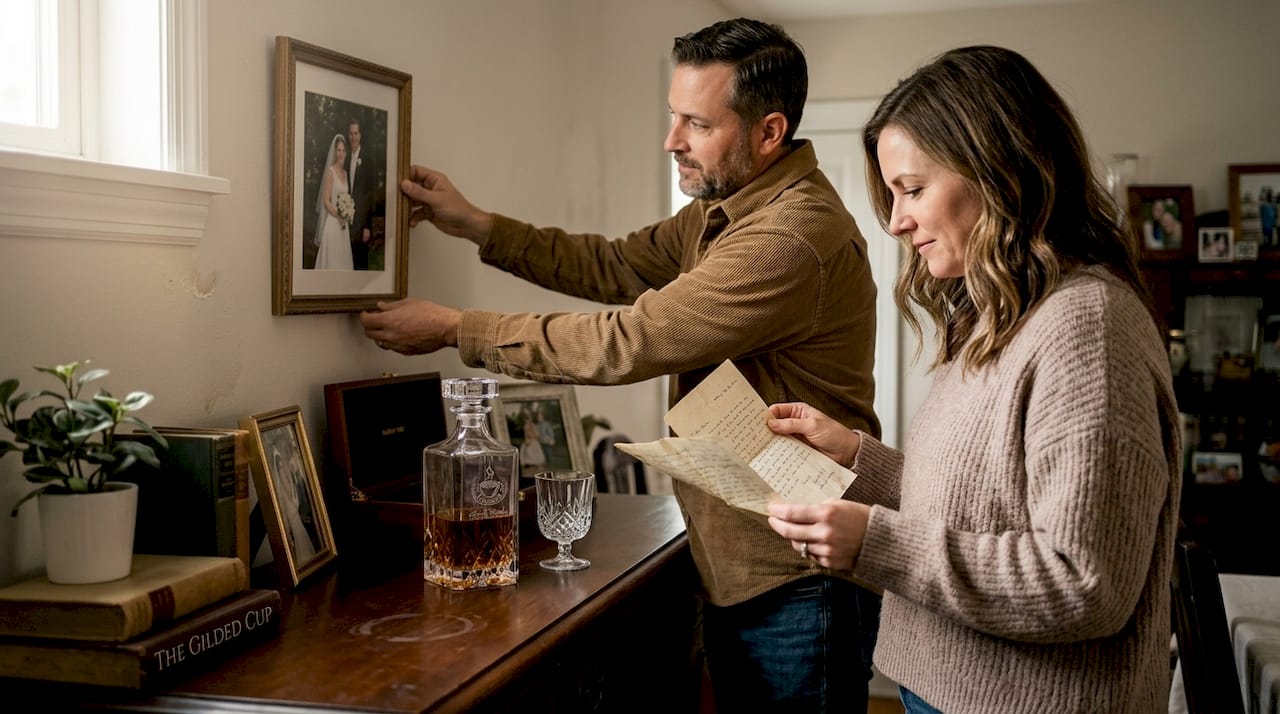
Pro Tip: When commissioning a bespoke piece as a gift, document the design process with photos and a written brief. The story of how the piece was made becomes as valuable as the object itself.
Gifting motivations are equally strong. For the buyer who wants to give something genuinely irreplaceable, a bespoke piece bypasses the awkward question of “what do you give someone who has everything?” The answer is something that only they could have.
Here is what drives collectors toward bespoke specifically:
- Investment potential as unique artisan pieces appreciate over time
- Personal narrative embedded in the design choices
- Craftsmanship appreciation as a form of connoisseurship
- Home bar elevation through statement pieces that spark conversation
- Gifting distinction that separates a thoughtful giver from a generic one
An Enamel Mug with a carefully selected finish and color story, chosen to complement a specific aesthetic environment, reflects exactly this collector mindset applied to everyday drinkware.
The bespoke process: Collaboration and craft
Understanding what bespoke drinkware is makes the creation process easier to appreciate. Here is how a serious bespoke commission typically unfolds:
- Initial consultation. The client shares their vision, context (home bar, gifting, collection), aesthetic preferences, and any functional requirements. This conversation shapes everything that follows.
- Design development. The artisan or studio translates the brief into sketches, mood boards, or digital renderings. Multiple rounds of feedback refine the direction.
- Material and technique selection. Crystal, ceramic, hand-blown glass, or metal? Sandblasting or laser etching? Gilding or glaze work? Each choice affects the final character of the piece.
- Prototype creation. For significant commissions, a prototype or sample is produced for client review before full production begins.
- Artisan production. The final piece is crafted by hand using the agreed techniques, with quality checks at each stage.
- Finishing and delivery. Final details, polishing, packaging, and documentation of the piece’s provenance complete the experience.
The critical distinction between artisanal bespoke and machine personalization lies in step three. Client-creator collaboration for one-of-a-kind items appeals to buyers seeking pieces with genuine character, not just customized aesthetics.
Pro Tip: Always ask a bespoke studio about their etching process. Sandblasting creates a deeper, textured surface feel that reads as more premium to the touch than laser etching, which tends to produce a sharper, flatter finish.
| Technique | Method | Result | Best for |
|---|---|---|---|
| Laser etching | Precision beam removes surface | Sharp, fine detail | Logos, monograms |
| Sandblasting | Abrasive pressure creates texture | Soft, matte depth | Decorative patterns |
| Hand gilding | Gold leaf applied by hand | Warm, luminous finish | Luxury accent work |
| Mouth-blowing | Artisan shapes molten glass | Organic, unique form | Statement vessels |
For collectors interested in aged spirits and bar culture, a piece like a Whiskey Barrel Aged product represents the same philosophy applied to what goes inside the glass, a commitment to process and patience that mirrors bespoke craft.
Bespoke vs. personalized vs. mass-produced: What sets them apart?
To make a confident purchase decision, you need a clear picture of what separates these three categories.
| Category | Design origin | Uniqueness | Process | Value over time |
|---|---|---|---|---|
| Bespoke | Client-creator collaboration | One of a kind | Artisan, multi-stage | High, appreciates with story |
| Personalized | Pre-made, surface added | Limited | Machine or print | Moderate |
| Mass-produced | Factory standard | Identical units | Automated | Low, depreciates |
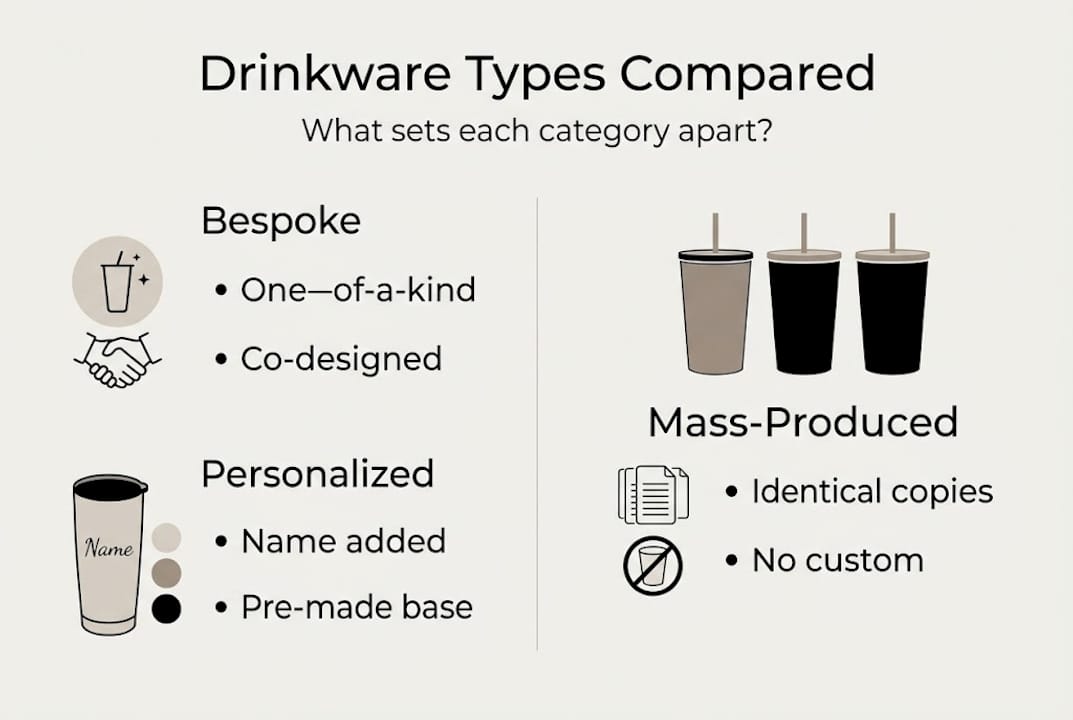
The word “bespoke” has become a marketing buzzword applied loosely to anything with a name drop or a color option. True bespoke involves deep customization, new molds, new shapes, and real collaborative input, versus simple engraving on a standard form. Luxury buyers increasingly recognize this gap.
Personalized drinkware occupies a legitimate middle ground. It offers meaningful customization at a more accessible price point, and for many occasions, it serves the purpose beautifully. A gift with a family crest or a date carries genuine sentiment. But it is not bespoke, and conflating the two leads to buyer disappointment.
Mass-produced glassware, even from prestigious brands, prioritizes consistency and volume. There is nothing wrong with it. Many iconic designs are mass-produced. But when you are building a home bar that reflects your taste and history, uniformity works against you.
High-end buyers favor bespoke for three reasons: they want something no one else has, they value the creative process itself, and they think in terms of legacy rather than utility. Exploring the Tea Collection, Flavored Collection, or Coffee Collection at The Gilded Cup reveals how even curated collections can offer distinct, design-forward pieces that move well beyond the generic.
The smartest buyers use this framework: mass-produced for everyday use, personalized for meaningful gifts, and bespoke for pieces that define a collection or a room.
Our perspective: Bespoke drinkware as artistry and legacy
Here is something the luxury industry rarely admits: the word “bespoke” has been cheapened so thoroughly that many buyers have stopped trusting it. That is a real loss, because when bespoke drinkware is done properly, it represents something genuinely rare. It is the intersection of your personal story and an artisan’s lifetime of skill.
We think too many collectors get distracted by logos and surface treatments. The more interesting question is always: what was the intention behind the design? A piece with a considered silhouette, a glaze chosen for how it reads in candlelight, and a form that fits naturally in your hand is more valuable than an engraved version of someone else’s standard design.
True bespoke is not about spending more. It is about deciding that an object in your life is worth the attention of real craft. When you explore modern designs with that mindset, even accessible pieces reveal whether a brand is thinking about design with intention or just chasing a price point.
The collectors who build the most meaningful drinkware collections focus on legacy. Not logos.
Explore bespoke-inspired options with The Gilded Cup
If this guide has sharpened your eye for what genuine craft and intentional design look like, The Gilded Cup is a natural next step. The collection brings together drinkware chosen for its design integrity, material quality, and visual distinction.
Start with the customizable Mug With Color Inside, a piece designed around interior color contrast that immediately signals thoughtful curation. The White Glossy Mug offers a clean, high-finish aesthetic ideal for gifting or home bar styling. For something with more texture and character, the Enamel Mug brings a tactile quality that sets it apart. Browse the full collection and find pieces that fit your vision.
Frequently asked questions
What exactly qualifies as bespoke drinkware?
Only drinkware created through a collaborative design process, often involving new molds, custom shapes, and deep client input, is truly bespoke. Collaborative custom design is the core requirement, not surface personalization.
How does bespoke differ from personalized glassware?
Personalized glassware adds names or designs to pre-made forms. Bespoke involves co-designing the piece from the ground up. True bespoke requires deep customization, not just a finishing touch.
What are common materials for bespoke drinkware?
High-end bespoke drinkware typically uses crystal, hand-blown glass, fine ceramics, or rare metals. These materials are chosen for both their aesthetic potential and the craftsmanship they allow.
Is bespoke drinkware a good investment?
Collectors value bespoke pieces for their exclusivity and artistry, making them strong candidates for legacy gifting and long-term appreciation. Exclusivity and craftsmanship are what drive their enduring appeal over mass-produced alternatives.