

What Is Hospitality-Grade Glassware? A Buyer's Guide
Hospitality-grade glassware is commercial drinkware purpose-built to deliver durability, clarity, and an optimized drinking experience across high-volume service environments. Known in the trade as commercial-grade glassware, it is engineered to technical specifications that standard consumer glass never meets: thermal shock resistance and reinforced rims and bases designed to survive repeated commercial dishwashing cycles. The two primary materials are commercial soda-lime glass, the workhorse of all-day dining, and lead-free crystal, the choice for fine dining venues that demand optical brilliance and razor-thin rims. Whether you are outfitting a hotel restaurant or building a serious home bar, understanding what separates commercial-grade glass from retail glass changes every purchasing decision you make.
What is hospitality-grade glassware, and how does it differ from consumer glass?
The defining difference between hospitality-grade and consumer glassware is not price. It is engineering. Commercial glassware is manufactured to resist the stresses that destroy ordinary glass: rapid temperature swings, high-alkaline detergents, and the mechanical impact of stacking, racking, and constant handling. A standard retail wine glass from a department store is designed to look good on a shelf. A hospitality-grade wine glass is designed to survive 500 wash cycles without clouding, chipping, or losing its shape.
Fully tempered glass is the hospitality industry standard for strength and safety. When tempered glass breaks, it fractures into small, relatively blunt pieces rather than long, dangerous shards. That matters enormously in a busy restaurant or bar where broken glass near food and guests is a liability. Tempering also extends the useful life of the glass under the mechanical stress of commercial dishwashers.
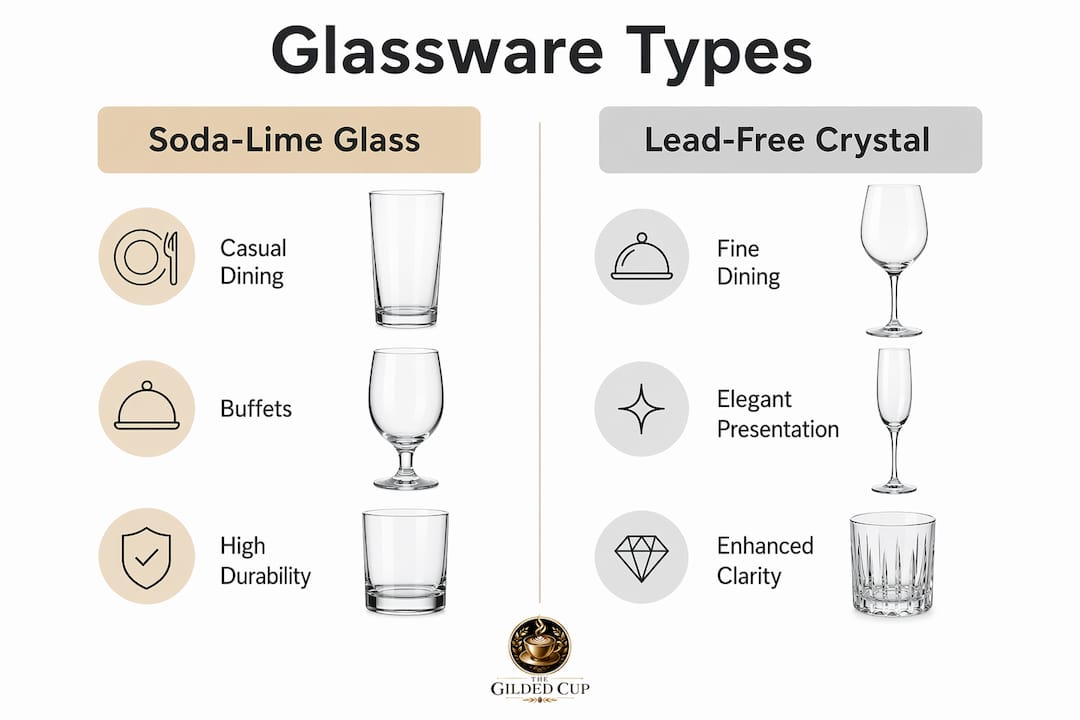
Material choice drives the split between outlet types. Commercial soda-lime glass handles all-day dining, buffets, and casual bars because it is dense, impact-resistant, and inexpensive to replace at scale. Lead-free crystal steps in for fine dining because it offers superior light refraction, thinner walls, and a clarity that communicates luxury before a guest takes a single sip. Both materials are manufactured to higher purity standards than consumer glass, which means they resist the chemical etching from repeated high-alkaline dishwashing that turns retail glass milky and dull within months.
Pro Tip: When comparing glassware for purchase, hold the glass up to a light source. Lead-free crystal will refract light visibly and show a bright, clean sparkle. Soda-lime glass will appear flatter and slightly more opaque. That visual test tells you the material instantly.
| Feature | Commercial soda-lime glass | Lead-free crystal |
|---|---|---|
| Primary use | Casual dining, buffets, bars | Fine dining, premium service |
| Durability | High impact resistance | Moderate, thinner walls |
| Clarity | Good | Superior light refraction |
| Dishwasher compatibility | Excellent | Good with low-alkaline detergent |
| Cost per unit | Lower | Higher |
Hospitality glassware types and their best use cases
Glassware in hospitality is not a single category. It is a system of purpose-designed shapes, each engineered to optimize a specific drink’s sensory performance. Glassware shape directly influences aroma release, temperature control, and carbonation retention, which is why a champagne flute and a red wine glass are not interchangeable despite both holding sparkling or still wine.
The major hospitality glassware types break down as follows:
- Stemware. Red wine glasses feature a wide bowl to allow the wine to breathe and release complex aromas. White wine glasses use a narrower bowl to preserve cooler temperatures. Champagne flutes have a tall, narrow profile that conserves carbonation and directs bubbles upward. Coupe glasses, the shallow wide-bowled alternative to flutes, sacrifice carbonation retention for visual drama and are popular in cocktail programs.
- Tumblers and rocks glasses. Short, heavy-based tumblers serve spirits neat or on the rocks. Their reinforced bases absorb the impact of being set down hard on bar surfaces, which is why they are the most durable glass in any bar program.
- Highball and Collins glasses. Tall, straight-sided glasses designed for long drinks and cocktails with significant mixer volume. Their height maintains carbonation longer than a wider glass would.
- Specialty beer glasses. Tulip glasses and pilsner glasses are designed to conserve carbonation and release aromas specific to beer styles. A tulip’s inward-curving rim traps hop aromas. A pilsner’s tall, tapered body showcases clarity and color.
- Cocktail and martini glasses. The iconic V-shaped martini glass keeps ingredients cold by minimizing hand contact with the bowl. Its wide mouth releases aromatics immediately on approach.
The outlet type determines which shapes belong in the program. Fine dining venues invest in full stemware sets including dedicated red, white, and dessert wine glasses alongside water goblets. Casual bistros often run a single universal wine glass alongside tumblers and highballs to reduce inventory complexity. Bars and lounges prioritize rocks glasses, highballs, and specialty cocktail vessels. Buffet and banquet operations rely almost exclusively on reinforced soda-lime tumblers and goblets that survive the rough handling of self-service environments.
Glassware functions as what industry professionals call “table jewelry.” It is the last object between the kitchen and the guest’s experience, and its shape, weight, and clarity all communicate something about the quality of what is inside. Choosing the wrong shape is not just an aesthetic error. It actively degrades the drink.
What are the real benefits of hospitality-grade glassware?
The benefits of hospitality-grade glassware operate on two levels: the guest experience and the operator’s bottom line. Correct glass selection enhances flavor, aroma, and temperature control, which translates directly into guest satisfaction and willingness to pay premium beverage prices. A wine served in the right glass tastes measurably better to the drinker. That is not marketing language. It is sensory science backed by decades of sommelier practice and beverage research.
For operators, the financial case for quality commercial glassware is built on four points:
- Reduced replacement frequency. Commercial-grade glass survives far more wash cycles than retail glass before clouding or chipping. The upfront cost per unit is higher, but the cost per use over the glass’s lifetime is lower.
- Consistent service flow. Venues that stock 2 to 3 glasses per seat handle breakage and dishwasher rotation without service interruptions. Casual and bistro settings typically require 2.5 times the number of covers in glassware stock. That buffer keeps service moving even on high-volume nights.
- Brand signal to guests. Glassware communicates brand standards the same way food presentation and plateware do. A mismatched or chipped glass sends a signal about quality that no amount of excellent food can fully override.
- Premium pricing support. Guests at venues with visibly high-quality glassware are more willing to order premium beverages. The glass frames the product. A $18 cocktail in a heavy crystal rocks glass feels worth $18. The same cocktail in a thin, lightweight tumbler creates doubt.
For home users and collectors, the benefits shift toward experience and longevity. Lead-free crystal from producers like Riedel, Zalto, or Schott Zwiesel delivers a drinking experience at home that matches what you get at a Michelin-starred restaurant. These glasses are also built to last decades with proper care, making them genuinely cost-effective compared to replacing cheaper glasses every few years.
How to choose glassware for hospitality settings and personal use
Selecting the right commercial-grade glassware starts with an honest assessment of your service context. The criteria differ significantly between a 200-seat hotel restaurant, a boutique cocktail bar, and a private home with a serious wine collection.
For operators, the key selection factors are:
- Volume and breakage rate. Calculate your seat count, then apply the 2.5x multiplier for casual settings or 3x for high-volume bars. Factor in your current breakage rate. If breakage is high, staff training and rack management will reduce costs more effectively than simply buying more expensive glass.
- Outlet type and service style. Fine dining requires lead-free crystal with thin rims. Buffets and casual dining need reinforced soda-lime glass. Bars need heavy-based tumblers and rocks glasses. Using one glassware type across all service environments is one of the most common and costly mistakes operators make.
- Dishwasher compatibility. Confirm that your chosen glass is rated for commercial dishwasher cycles. Check the detergent alkalinity your operation uses. Lead-free crystal requires lower-alkaline detergents to maintain its clarity over time.
- Brand consistency. Operators should view glassware as part of a table system that includes dinnerware and flatware. A sleek, modern plate paired with a heavy, old-fashioned tumbler creates visual dissonance that guests register subconsciously.
- Simplified programs where appropriate. Professional operators often use a universal wine glass to reduce inventory complexity and storage costs while maintaining solid performance. This works well for mid-market venues where operational efficiency outweighs the marginal sensory benefit of glass-specific stemware.
For personal buyers, the decision is simpler. Match the glass to the drinks you actually serve most often. If you drink primarily red wine, invest in a quality large-bowl red wine glass from a recognized producer. If you entertain frequently, prioritize dishwasher-safe lead-free crystal that handles regular use without degrading. Check Thegildedcup’s guide to choosing glassware for a practical framework that applies to both home and commercial buyers.
Pro Tip: Before purchasing a full set, buy two or three glasses and run them through your dishwasher ten times. Check for cloudiness, rim chips, and any change in clarity. That real-world test tells you more than any product specification sheet.
Key takeaways
Hospitality-grade glassware is defined by its engineering for durability, material quality, and sensory performance, not by price or aesthetics alone.
| Point | Details |
|---|---|
| Material determines use case | Soda-lime glass suits casual and high-volume settings; lead-free crystal is for fine dining. |
| Shape affects drink quality | Glass shape controls aroma release, carbonation, and temperature, directly changing how a drink tastes. |
| Stock 2.5x to 3x seat count | Operators need this buffer to maintain service flow through breakage and dishwasher cycles. |
| Training beats expensive glass | Reducing breakage through staff protocols saves more money than upgrading to costlier glassware alone. |
| Glassware is a brand signal | Mismatched or low-quality glass undermines guest perception regardless of food and service quality. |
Why glassware selection is more strategic than most operators realize
I have seen operators spend months selecting a new menu and an afternoon picking glassware. That ratio is backwards. The glass is the last thing that touches the guest’s experience before they form a judgment, and it carries more sensory weight than most people in the industry acknowledge.
The most common mistake I observe is treating glassware as a commodity purchase. Operators buy whatever is cheapest and available, then wonder why their breakage costs are high and their guests are not ordering second rounds of premium beverages. The glass is not a neutral container. It is an active participant in the drinking experience. A thin-rimmed lead-free crystal wine glass makes the same wine taste more refined because the rim disappears against the lip and the liquid takes center stage.
The second mistake is ignoring the table as a system. A beautifully plated dish on fine ceramic, served alongside a generic tumbler, creates a visual inconsistency that guests notice even if they cannot articulate why. The 2026 drinkware trends show operators moving toward cohesive table programs where glass, plate, and flatware are selected together rather than independently.
For personal buyers, my advice is to stop treating hospitality-grade glass as an indulgence. A set of quality lead-free crystal wine glasses from a producer like Schott Zwiesel or Riedel will outlast five generations of department store glass and genuinely improve every bottle you open. That is not a luxury purchase. It is a rational one.
— Sharbel
Explore premium glassware at Thegildedcup
Thegildedcup curates a selection of luxury and commercial-grade glassware for buyers who understand that the glass matters as much as what goes inside it. The collection spans lead-free crystal stemware, specialty cocktail vessels, and collectible fine drinkware suited to both serious home entertaining and hospitality procurement. Every piece is selected for craftsmanship, material quality, and long-term performance. Whether you are building a complete table program for a venue or adding a considered set to your home bar, Thegildedcup’s premium glassware collection gives you the quality and specificity that generic retail cannot. Browse the full range and find glassware that performs as well as it looks.
FAQ
What does hospitality-grade glassware mean?
Hospitality-grade glassware is commercial drinkware engineered for durability, thermal shock resistance, and consistent performance under high-volume use. It is manufactured to withstand repeated commercial dishwashing cycles without clouding, chipping, or losing clarity.
What is the difference between soda-lime glass and lead-free crystal?
Soda-lime glass is denser and more impact-resistant, making it the standard for casual dining and bars. Lead-free crystal offers superior optical clarity and thinner rims, and is preferred in fine dining for the premium experience it delivers.
How many glasses should a restaurant stock per seat?
Casual and bistro settings typically stock 2.5 times the number of covers in glassware to account for breakage and dishwasher rotation. High-volume bars often stock closer to 3 glasses per seat to maintain uninterrupted service.
Does glassware shape actually affect how a drink tastes?
Yes. Glass shape controls aroma concentration, carbonation retention, and how the liquid contacts the palate. A tulip beer glass traps hop aromas that a straight-sided glass would release immediately, changing the perceived flavor profile of the same beer.
Is hospitality-grade glassware worth buying for home use?
For anyone who entertains regularly or takes their wine and cocktail experience seriously, yes. Lead-free crystal from producers like Riedel or Schott Zwiesel is dishwasher-safe, built to last decades, and delivers a measurably better drinking experience than standard retail glass.