

What Is Vintage Glassware: a Collector's Guide
Most people assume vintage glassware is simply old glass that survived a few decades in someone’s cabinet. That assumption misses the point entirely. What is vintage glassware, really? It’s a category defined by age, craftsmanship, historical context, and often surprising complexity. Whether you’re drawn to the soft pink hues of Depression glass or the iridescent sheen of Carnival glass, understanding what makes a piece vintage, how to spot it, and how to use it safely transforms casual curiosity into genuine collecting expertise.
Table of Contents
- Key takeaways
- What is vintage glassware, exactly
- How to identify vintage glassware
- Popular styles and what collectors actually want
- Safety considerations for using vintage glass
- My take on collecting vintage glassware the right way
- Explore drinkware that complements your vintage collection
- FAQ
Key takeaways
| Point | Details |
|---|---|
| Vintage vs. antique | Vintage glassware is 20 to 99 years old; antique glass is 100 or more years old. |
| Physical identification | Pontil marks and mold seams are reliable clues for dating and authenticating pieces. |
| Safety with lead crystal | Lead crystal can leach into acidic beverages; display is the safest use for high-risk pieces. |
| Collectible value | Rare patterns like certain Pyrex designs can sell for thousands of dollars among collectors. |
| Informed collecting | Knowing a piece’s original purpose helps you decide whether to display, use, or repurpose it. |
What is vintage glassware, exactly
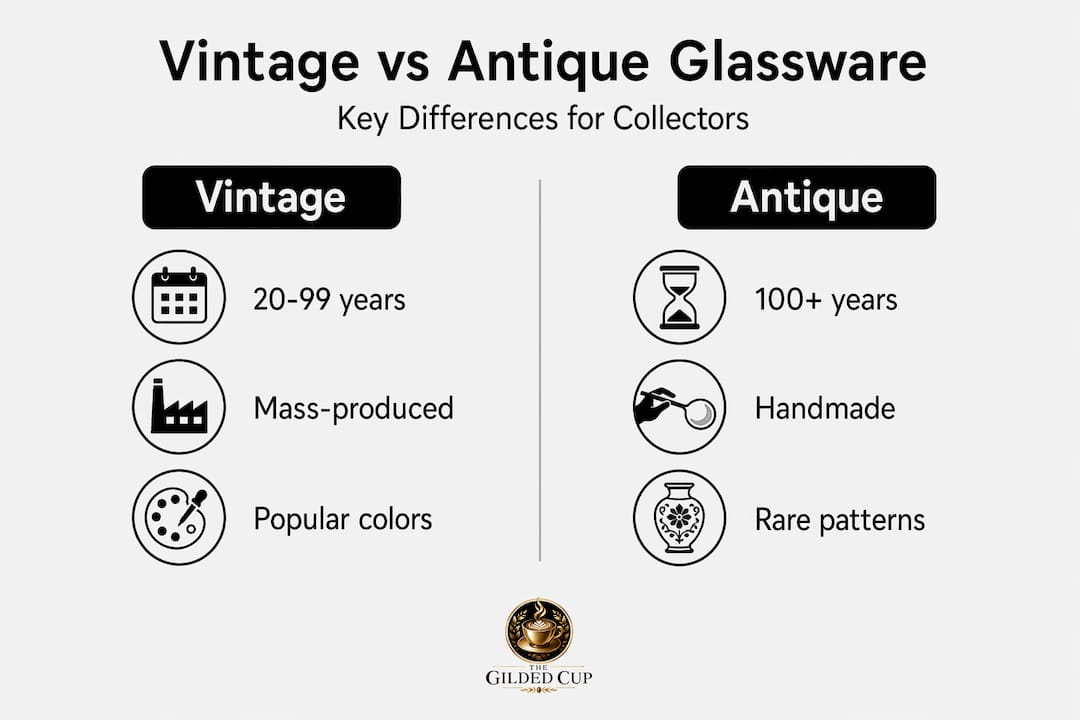
The phrase gets thrown around loosely, but the definition matters. Vintage glassware is generally defined as items produced between 20 and 99 years ago, while antique glassware is at least 100 years old. Some dealers and auction houses set the vintage threshold higher, starting at 30 or 40 years, which is why you’ll find inconsistency in how the term is applied at flea markets and estate sales.
That distinction has real consequences for collectors. A mid-century modern cocktail set from the 1960s sits comfortably in the vintage category. A hand-blown lead crystal decanter from the 1880s has crossed into antique territory. Knowing which side of that line a piece falls on affects how you price it, insure it, and talk about it with other enthusiasts.
Here’s a breakdown of the two categories side by side:
| Feature | Vintage glassware | Antique glassware |
|---|---|---|
| Age range | 20 to 99 years | 100 years or more |
| Common styles | Depression glass, Carnival glass, Pyrex, mid-century modern | Victorian crystal, early pressed glass, art nouveau |
| Production method | Machine and handmade mix | Primarily hand-blown or hand-pressed |
| Collector market | Broad and accessible | Smaller, more specialized |
| Price range | Moderate to high | High to museum-grade |
Popular vintage glass styles include Depression glass, which was mass-produced during the 1920s and 1930s in soft pastel colors to be affordable for ordinary families. Carnival glass, recognized by its iridescent surface coating, was originally a cheap substitute for expensive art glass. Milk glass, with its opaque white finish, had its peak during the 1950s and 1960s. Mid-century modern styles, often geometric and sculptural, remain some of the most actively traded pieces in today’s market.
How to identify vintage glassware
Identification is where casual interest becomes real knowledge. The physical construction of a glass piece tells a story that no label or receipt can replace.
Pontil marks are your first checkpoint. Pontil marks are exclusive to handmade glass pieces. An open pontil scar on the base indicates pre-1865 American glass production. Iron pontil marks date roughly from 1845 to 1863. If a piece has a smooth, polished base with no scar at all, it was almost certainly machine-made after the late 19th century.
Mold seams are equally revealing. Mold seams stopping at the shoulder indicate hand finishing, typically before 1880. Seams that run all the way through the lip of the piece signal machine production, generally post 1903 to 1905. Run your fingertip along the seam from base to rim. Where it stops tells you more than any stamp on the bottom.
Key physical clues worth examining on any piece:
- Pontil scars: Location and type identify production era and method.
- Mold seams: Height of seam indicates hand vs. machine finishing.
- Maker’s marks: Embossed logos, etched initials, or paper labels identify manufacturers.
- Weight: Heavier glass often signals lead crystal content.
- Sound: Leaded crystal emits a long, echoey ring when tapped lightly; regular glass gives a flat, dull sound.
- Light refraction: Lead crystal breaks light into vivid prismatic color; standard glass does not.
Watch out for reproductions. Manufacturers have copied Depression glass patterns since the 1970s, and Carnival glass fakes are common at general antiques markets. New reproductions often feel lighter, show sharper mold lines without the slight softness of original production, and lack the minor imperfections that come with older manufacturing methods.
Pro Tip: Use a UV or black light to check glassware. Genuine uranium glass glows a vivid green under UV light. Many Depression-era pieces contain trace uranium. Reproductions almost never do, making this one of the fastest and most reliable authenticity checks available to collectors.
Popular styles and what collectors actually want
The vintage glass market is not monolithic. Different collectors chase very different things, and understanding which styles carry real value helps you shop and sell with confidence.
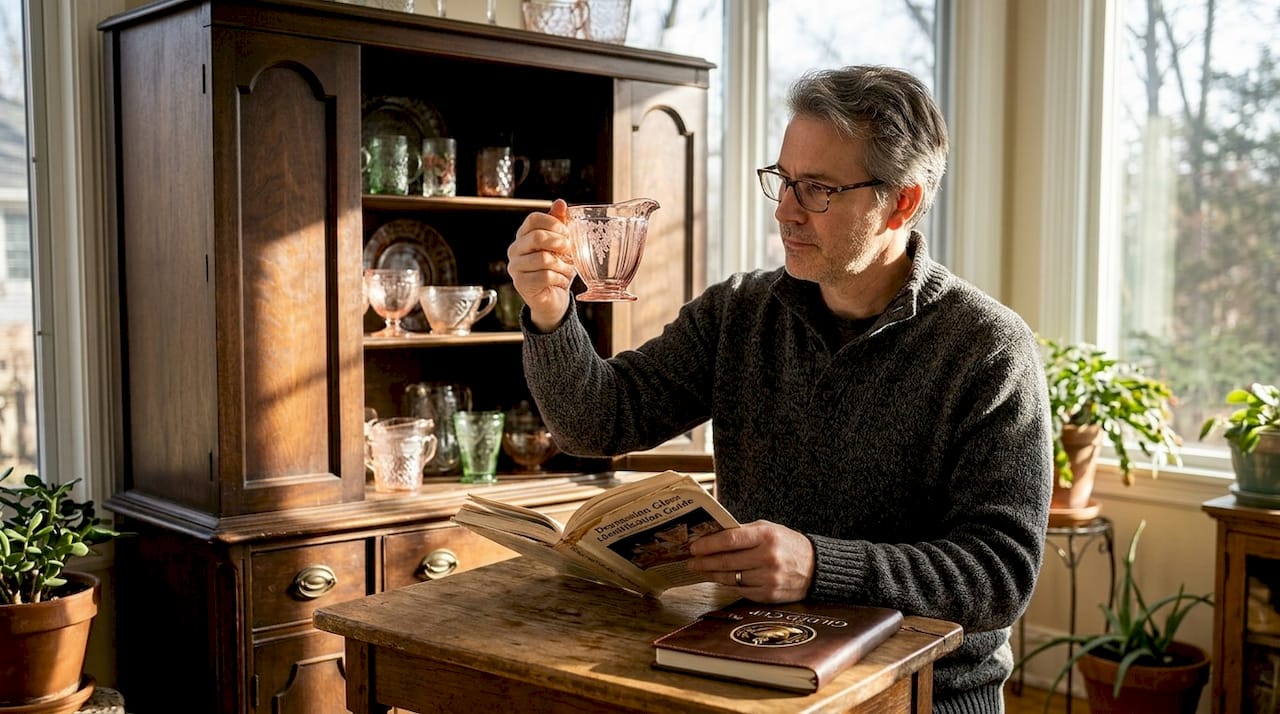
Depression glass collectors focus heavily on specific patterns and colors. The most sought-after pieces tend to be in pink, green, and cobalt blue. Incomplete sets with rare serving pieces, like a butter dish or a covered sugar bowl, command premiums because they were more easily broken and fewer survived.
Carnival glass draws collectors who appreciate the iridescent surface finish, created by spraying metallic salts onto molten glass before cooling. Marigold, amethyst, and red are the most collectible colors. Red Carnival glass is particularly rare because the copper-based formula was expensive and inconsistently produced.
Rare vintage Pyrex patterns occupy their own devoted community. Some pieces reach values up to $10,000. Mid-century colors like turquoise and pink are especially desirable, and the “Lucky in Love” pattern from the late 1950s regularly sells for hundreds of dollars per piece at auction.
Here is how the main collectible styles compare:
| Style | Peak era | Signature feature | Current collector demand |
|---|---|---|---|
| Depression glass | 1920s to 1930s | Pastel colors, translucent | High, especially pink and green |
| Carnival glass | 1900s to 1930s | Iridescent surface | Very high for red and amethyst |
| Milk glass | 1950s to 1970s | Opaque white finish | Moderate, trending upward |
| Pyrex (vintage) | 1940s to 1980s | Bold patterns, ovenproof | Very high for rare patterns |
| Mid-century modern | 1950s to 1970s | Geometric, sculptural | High, especially barware |
What drives collector interest beyond aesthetics? Rarity, condition, and original intent. Vintage glassware was often designed with distinct purposes. Durable tumblers were built for daily use, while delicate art glass was meant purely for display. Pieces that crossed the line, a delicate Depression glass cup that somehow survived decades of actual use, carry a special kind of story that collectors respond to emotionally and financially.
Pieces with original boxes, matching sets, or documented provenance from notable manufacturers like Fenton, Anchor Hocking, or Westmoreland will always outsell comparable orphaned pieces. Condition is unforgiving. Chips, cracks, and cloudiness from dishwasher use permanently reduce value.
Safety considerations for using vintage glass
Here is where the hobby gets more nuanced. The beauty of a piece and its safety as a functional item are two separate questions, and conflating them can cause real harm.
Many vintage crystal pieces contain lead oxide. Lead oxide content in vintage crystal ranges from 18% to 40%, which can leach into acidic beverages like wine, juice, and cocktails. The risk increases with contact time and liquid acidity.
How do you know if a piece contains lead? Testing is trickier than most people expect:
- Listen and feel. Leaded crystal rings clearly when tapped and feels heavier than regular glass of the same size. These are hints, not confirmation.
- Check manufacturer history. Crystal from makers like Waterford, Baccarat, or Bohemian glasshouses is almost certainly leaded. Research the brand before using any piece for beverages.
- Avoid at-home lead test kits for glass. At-home lead testing kits are ineffective for detecting lead embedded in the glass matrix. Surface swabs only detect paint-level lead contamination, not chemically bonded lead inside the glass itself.
- Request professional XRF analysis. X-ray fluorescence testing identifies lead content accurately and non-destructively. Museums use it routinely. Some lab services offer it for collectors at reasonable cost.
- Store acidic liquids separately. Never store wine, juice, or vinegar-based drinks in vintage crystal decanters. Even brief exposure over repeated uses accumulates risk.
Lead in vintage crystal is chemically embedded and cannot be removed by soaking or scrubbing. Any cleaning that affects the surface can actually increase leaching potential rather than reduce it.
Pro Tip: Repurpose high-risk leaded crystal pieces as decorative vessels for dry items, fresh flowers without water, or display only. Repurposing leaded glass rather than discarding it honors the craftsmanship while keeping you and your family safe.
If you’re building a vintage glass collection that you plan to actually use, prioritize non-crystal Depression glass, Pyrex, and machine-made mid-century tumblers. These are generally lead-free and dishwasher-safe in many cases, though hand washing is always recommended to preserve color and pattern.
My take on collecting vintage glassware the right way
I’ve spent a lot of time around vintage drinkware, and the single biggest mistake I see new collectors make is buying purely on looks without understanding what they actually own. A stunning piece of leaded Bohemian crystal and a cheerful pink Depression glass candy dish require completely different handling, storage, and safety considerations. Treating them the same is how problems start.
The identification process trips people up more than anything else. I’ve seen experienced buyers mistake reproduction Carnival glass for originals because they skipped checking the mold seams. The physical clues, pontil scars, seam height, weight, the ring of the glass when tapped, are not optional once you’re spending real money. They’re the baseline.
What I find genuinely rewarding about this hobby is that it rewards patience and study over impulse and budget. You can build a beautiful, historically significant collection without spending thousands if you learn to recognize what others overlook. A Depression glass serving bowl with a rare pattern in perfect condition, found at an estate sale for twelve dollars, beats an overpriced piece bought at a curated show every time.
My honest recommendation is to collect with intent. Know whether you want pieces for display, for actual daily use, or for investment. Those three goals lead to very different purchasing decisions. A piece that’s gorgeous on a shelf may be completely unsuitable for serving cocktails, and that’s fine as long as you know that going in.
The stewardship side of this hobby matters too. When you buy vintage glass, you’re taking responsibility for preserving something that has already outlasted its original owner. That deserves some respect in how you store, clean, and eventually pass it along.
— Sharbel
Explore drinkware that complements your vintage collection
If you’re drawn to the warmth and character of vintage drinkware, Thegildedcup offers pieces that share that same philosophy of craftsmanship and intention. Vintage collections are rarely complete in isolation. They benefit from modern companions that carry the same tactile quality and visual richness.
The enamel mug collection at Thegildedcup brings a durable, heritage-inspired aesthetic that pairs naturally alongside mid-century and rustic vintage pieces. For those who love the visual personality of colored interiors, the mug with color inside delivers that same surprise of color that made Depression glass so beloved. These are not reproductions or novelty items. They are carefully selected pieces that earn their place in a considered collection. Browse Thegildedcup’s full range to find drinkware that holds its own next to your best vintage finds.
FAQ
What qualifies as vintage glassware?
Vintage glassware refers to pieces produced between 20 and 99 years ago, distinguishing them from antiques, which are 100 or more years old. Some collectors and dealers set the lower threshold at 30 to 40 years.
How do I identify authentic vintage glassware?
Check for pontil marks and mold seams on the base and sides of the piece. Seams that stop at the shoulder indicate pre-1880 hand finishing, while seams running through the lip point to machine production after 1903.
Is it safe to drink from vintage glassware?
It depends on the piece. Vintage crystal with lead oxide content poses a leaching risk with acidic beverages. Non-crystal Depression glass and mid-century machine-made tumblers are generally safer for regular use. When in doubt, use a piece for display only.
What vintage glassware is most valuable?
Rare patterns command the highest prices. Certain vintage Pyrex designs can reach $10,000, while red Carnival glass and complete Depression glass sets in pink or cobalt blue consistently fetch strong prices at auction.
What is vintage stemware?
What is vintage stemware is a category within vintage glassware that includes wine glasses, champagne flutes, and goblets with a stem and base. Vintage stemware from makers like Fostoria, Cambridge Glass, or Heisey is particularly collectible and often found in estate sales and specialty auctions.