

Understanding Decanter Types: a Practical Buying Guide
Most people assume a decanter is just a prettier bottle. Pour your wine or whiskey in, set it on the table, look sophisticated. Done. But that assumption costs you real flavor. Understanding decanter types means recognizing that each design choice, from the width of the base to the tightness of the stopper, is doing specific work for a specific beverage. This guide breaks down exactly what those differences are, why they matter, and how to choose the right decanter for every occasion.
Table of Contents
- Key takeaways
- Understanding decanter types and why they exist
- Wine decanter shapes and how they affect your pour
- Spirit decanters: design, materials, and what actually matters
- How to choose between decanter styles
- Using decanters to enhance your entertaining
- My honest take on choosing decanters
- Discover the right decanter at Thegildedcup
- FAQ
Key takeaways
| Point | Details |
|---|---|
| Shape drives aeration | Wide-bodied decanters maximize oxygen contact for young reds; narrow necks protect older or delicate wines. |
| Spirits need airtight seals | Spirit decanters require ground-glass stoppers to prevent evaporation and flavor degradation over time. |
| Material safety matters | Lead-free crystal is the only appropriate choice for storing high-proof spirits in a decanter. |
| One decanter is not enough | Wine and spirit decanters serve different functions and should not be interchanged for best results. |
| Cleaning is often overlooked | Wide-based decanters require specialized cleaning tools; neglecting this shortens the decanter’s life and affects taste. |
Understanding decanter types and why they exist
A decanter does two fundamentally different jobs depending on what you put in it. For wine, aeration separates sediment and softens tannins, transforming how the wine tastes in your glass. For spirits, the job is almost entirely preservation and presentation. Whiskey is already oxidized during the bottling process, so placing it in a decanter offers minimal quality improvement beyond aesthetics.
That core difference explains why the design priorities split so sharply between the two categories.
Here is what each type of decanter is actually built to do:
- Wine decanters: Broad bases expose maximum wine surface area to oxygen. Most come without stoppers or with loosely fitting ones, because extended air exposure is the whole point for young reds.
- Spirit decanters: Feature heavy, airtight stoppers and often more compact shapes. The goal is to keep air out after the initial pour, not invite it in.
- Carafes: Lighter, simpler glass vessels used for serving wine by the glass or water at the table. They serve presentation, not aeration.
- Ship (or Captain’s) decanters: Wide, flat-bottomed decanters historically used at sea. Their low center of gravity kept them stable on rocking ships. Today, they are a collector’s item and a statement piece for wine service.
Pro Tip: Young red wines, especially Cabernet Sauvignon and Syrah, benefit from up to 4 hours of aeration before serving. Older wines aged over 20 years should be poured right before serving to avoid rapid oxidation despite the sediment they carry.
Wine decanter shapes and how they affect your pour
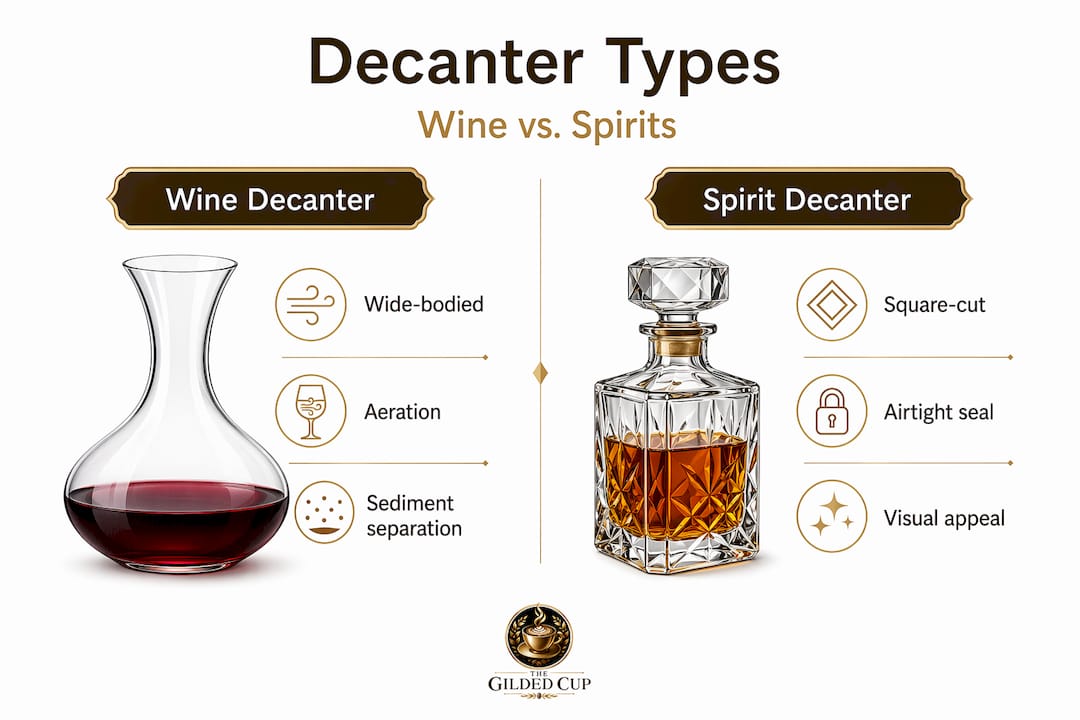
Shape is not decoration in the wine world. It is engineering. Wide-bodied decanters maximize oxygen exposure, which is exactly what a tannic, full-bodied red needs to open up. Narrow-neck designs do the opposite, slowing oxidation to protect older vintages or delicate whites.
Here is how the main wine decanter shapes compare:
| Shape | Best wine style | Aeration level | Key benefit |
|---|---|---|---|
| Wide-bodied (Bordeaux style) | Young, full-bodied reds | High | Opens up bold tannins quickly |
| Standard U-shape | Everyday reds and rosés | Medium | Versatile, easier to clean |
| Narrow-neck | Older vintages, fragile reds | Low | Prevents over-oxidation |
| Swan or duck neck | Ceremonial or aesthetic use | Medium to high | Visual drama, functional pour |
| Ship (flat-bottomed) | Collector wines, red service | Medium | Stability and table presence |
The swan-neck decanter is worth special attention. Its extended, curved neck slows the pour, giving you control over how quickly wine meets air. It is not just for show. It acts as a built-in filter for presentation and pace.
The challenge no one tells you about is cleaning. Wide bases create real cleaning difficulty, and if you cannot reach the interior thoroughly, wine residue builds up and affects future pours. This is a practical reason to think twice before buying the most dramatic wide-bodied shape you find.
Pro Tip: Invest in a set of decanter cleaning beads and a long-handled brush before you buy a wide-based wine decanter. The cleaning experience will make or break how often you actually use it.
Following a proper decanting wine technique matters just as much as which decanter you choose. The right shape paired with the right method makes a measurable difference in the glass.
Spirit decanters: design, materials, and what actually matters
Spirit decanters look like wine decanters but behave like safes. Their job is to lock flavor in, not let air in. When you understand what separates a good spirit decanter from a mediocre one, shopping becomes much clearer.
Here is what to look for when selecting a spirit decanter:
- Stopper quality: Airtight ground-glass stoppers create near-vacuum seals that prevent alcohol evaporation. Loose or purely decorative stoppers allow flavor to degrade within weeks. Test the stopper fit before buying.
- Material choice: Lead-free crystal is the non-negotiable standard for spirits. Leaded crystal poses real health risks when storing high-proof alcohol, as lead leaches into the liquid over time. Always confirm the product is labeled lead-free.
- Shape and airspace: Decanters with too much empty space above the liquid accelerate oxidation. A good spirit decanter should be sized close to the bottle volume you are storing, leaving only modest headspace.
- Base weight: Heavy, solid bases add stability and signal quality. Thin-based spirit decanters tip easily and often feel cheap in hand.
- Capacity: Standard spirit decanters range from 800ml to 1 liter, matching standard 750ml bottles with just enough room for a controlled pour.
The price gap between a quality spirit decanter and a basic glass one is real. Quality spirit decanters typically start around $80, while basic glass models can be found for $15. The difference is in stopper precision, crystal clarity, and the integrity of the seal. For a whiskey you spent serious money on, cutting corners on the vessel is a false economy.
Common shapes for spirit decanters include square-cut designs for Scotch and bourbon, rounded apothecary shapes for a vintage bar aesthetic, and sleek cylindrical forms for a modern home bar. Each works functionally as long as the stopper seals properly.
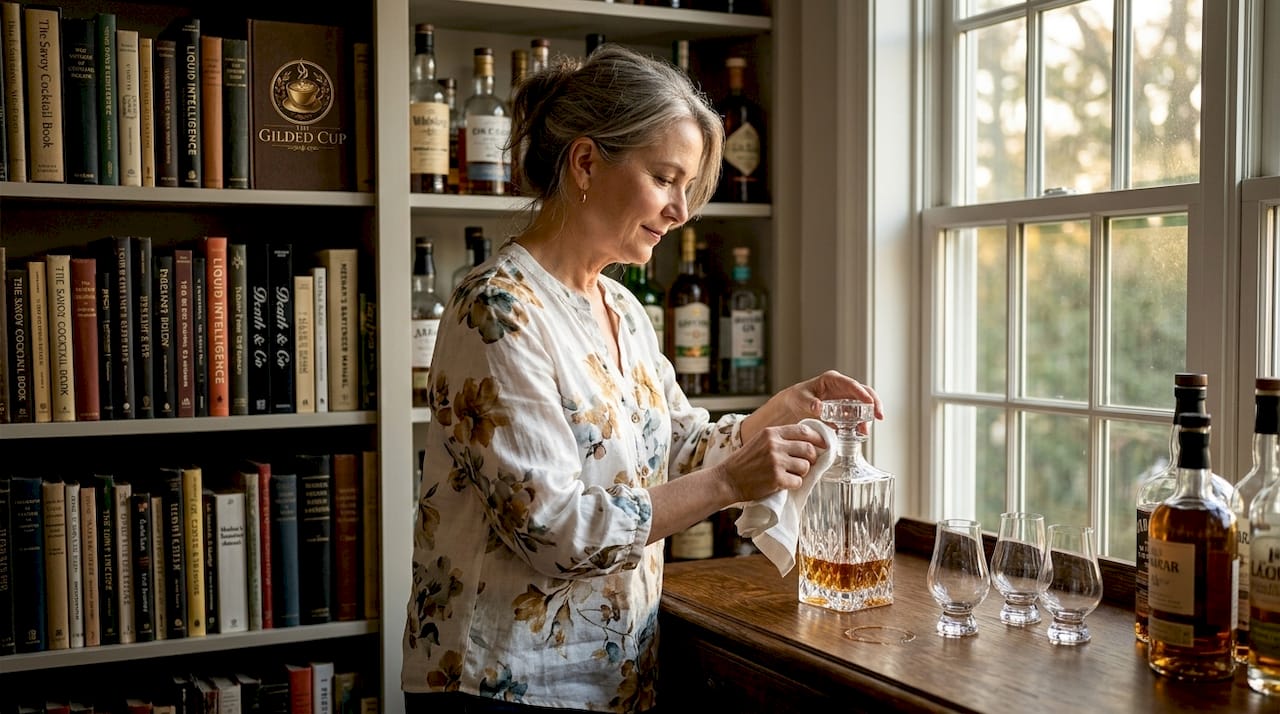
You can explore more about spirit decanter selection and how these shapes fit into a broader home bar setup before committing to a purchase.
How to choose between decanter styles
Pulling all of this together into a buying decision comes down to four honest questions: What are you serving? How long will it sit in the decanter? What is your budget? And how much time do you want to spend cleaning?
Here is a quick side-by-side of wine versus spirit decanters to put it plainly:
| Feature | Wine decanter | Spirit decanter |
|---|---|---|
| Primary purpose | Aeration and sediment separation | Preservation and presentation |
| Stopper | Open or loose fitting | Airtight, ground-glass |
| Preferred shape | Wide-bodied or swan-neck | Square, rounded, or cylindrical |
| Material | Glass or lead-free crystal | Lead-free crystal preferred |
| Cleaning difficulty | Higher (wide base) | Moderate (narrower form) |
| Ideal use time | Pour and serve within hours | Can store for weeks if sealed |
When it comes to using separate decanters for wine and spirits, the functional case is strong. Wine decanters let air in by design. Put whiskey in one overnight and you are accelerating oxidation, not preventing it.
A few practical tips to guide your decision:
- Match your decanter volume to a standard 750ml bottle, with about 50 to 100ml of headspace for wine and less for spirits.
- If you host infrequently, prioritize a wine decanter with a manageable base size over a dramatic wide-bodied piece you will struggle to clean.
- For home bars with both wine and spirits on display, budget for both types. They serve different guests in your collection.
Pro Tip: Any clean, watertight glass vessel can technically be used to decant wine. Glass is preferred because it is visually neutral and easy to assess for cleanliness. Crystal adds clarity and weight, but the vessel’s function matters more than its material for wine.
Using decanters to enhance your entertaining
The right decanter does more than improve flavor. It sets a tone. When guests see a beautiful wide-bodied decanter breathing on the table, they already expect something worth tasting. That expectation shapes how they experience what is in the glass.
Here is how to put decanter knowledge to work when you are hosting:
- Match the decanter to the varietal. Serve a young Napa Cabernet in a wide-bodied decanter with at least two hours of aeration before guests arrive. Pour a 15-year-old Burgundy into a narrow-neck decanter just before sitting down to avoid over-oxidation. These are not guesses. They are decisions based on wine age and decanting time.
- Use spirit decanters on your bar cart, not just for serving. A well-sealed whiskey decanter on a bar cart with proper glassware signals to guests that you take your spirits seriously. It also keeps premium bottles looking sharp rather than label-forward.
- Group by occasion. Keep a simple U-shaped decanter for weeknight dinners and reserve the swan-neck or ship decanter for special occasions. Rotating pieces keeps your bar feeling alive and curated.
- Complement your decanters with quality glassware. A well-chosen decanter loses half its impact if poured into mediocre glasses. Matching your barware to the spirit of the decanter creates a cohesive visual and sensory experience for everyone at the table.
Thinking about your home bar aesthetics as a whole, not just individual pieces, is what separates a thoughtful host from someone who simply has a lot of stuff on a shelf.
My honest take on choosing decanters
I spent years using the same wide-bodied wine decanter for everything. Red wine, white wine, occasional whiskey. I told myself I was keeping things simple. What I was actually doing was under-serving every bottle I opened.
The shift that changed my approach was realizing that the decanter is not a neutral vessel. It is making decisions about your drink whether you intend it to or not. A loose stopper is letting your Scotch oxidize right now. A wide base is aerating your 1998 Barolo too aggressively. These are not edge cases for collectors. They happen every time you pour.
My strongest recommendation is to start with one quality lead-free crystal spirit decanter with a proper ground-glass stopper, and one mid-sized wine decanter with a manageable base you can actually clean. That combination handles 90% of what you will ever need for entertaining at home. From there, you add shapes and styles based on what genuinely excites you, not because some list told you to buy a swan-neck decanter.
The aesthetic choices matter too. I have seen beautiful decanters that were impossible to clean and functional ones that looked like medical equipment. The right answer sits in between. You want something you are proud to put on the table and can maintain without frustration. That balance is what makes a decanter worth owning long-term.
— Sharbel
Discover the right decanter at Thegildedcup
Finding a decanter that balances function, beauty, and health-safe materials is harder than it looks in most retail settings. Thegildedcup curates a selection of fine drinkware with exactly that balance in mind, featuring lead-free crystal decanters, precision-crafted spirit vessels, and complementary barware built for people who take their hosting seriously.
Whether you are building out your first home bar or adding to a collection, the pieces at Thegildedcup are chosen for craftsmanship and real-world usability. Pair a quality decanter with one of the brand’s enamel mugs for a bar setup that works beautifully for every type of drink and occasion.
FAQ
What is the main difference between wine and spirit decanters?
Wine decanters are built to maximize aeration with wide, open shapes, while spirit decanters prioritize airtight seals and preservation. Using a wine decanter for spirits accelerates oxidation and degrades flavor over time.
How long should you decant wine before serving?
Wines aged 5 to 20 years typically need 1 to 2 hours, while young reds under 5 years can benefit from up to 4 hours of aeration. Older wines over 20 years should be poured immediately before serving to prevent rapid oxidation.
Is lead-free crystal necessary for a spirit decanter?
Yes. Leaded crystal leaches into high-proof alcohol during storage and poses genuine health risks over time. Always confirm a spirit decanter is labeled as lead-free crystal before purchasing.
Can you use one decanter for both wine and whiskey?
It is possible but not recommended. Wine decanters lack proper stoppers, which causes whiskey to oxidize quickly. For best results, use separate decanters designed for each beverage.
What size decanter should you buy?
Most standard wine and spirit bottles hold 750ml, so a decanter in the 800ml to 1 liter range gives you enough volume with appropriate headspace for control and minimal oxidation risk.