

Why Choose European Glassmakers for Fine Glassware
European glassmakers are defined by a combination of centuries-old artisanal technique, strict regulatory standards, and a cultural depth that mass production cannot replicate. The question of why choose European glassmakers has a direct answer: no other region produces glassware where heritage, hand skill, and sustainability converge at this level. Manufacturers like La Rochère, operating since 1475, and Cristallerie Royale de Saint-Louis, founded in 1586, represent living proof that glassmaking traditions can survive and sharpen over centuries. For consumers and interior designers who care about provenance and craft, European glass is the standard everything else is measured against.
Why choose European glassmakers over mass-produced alternatives
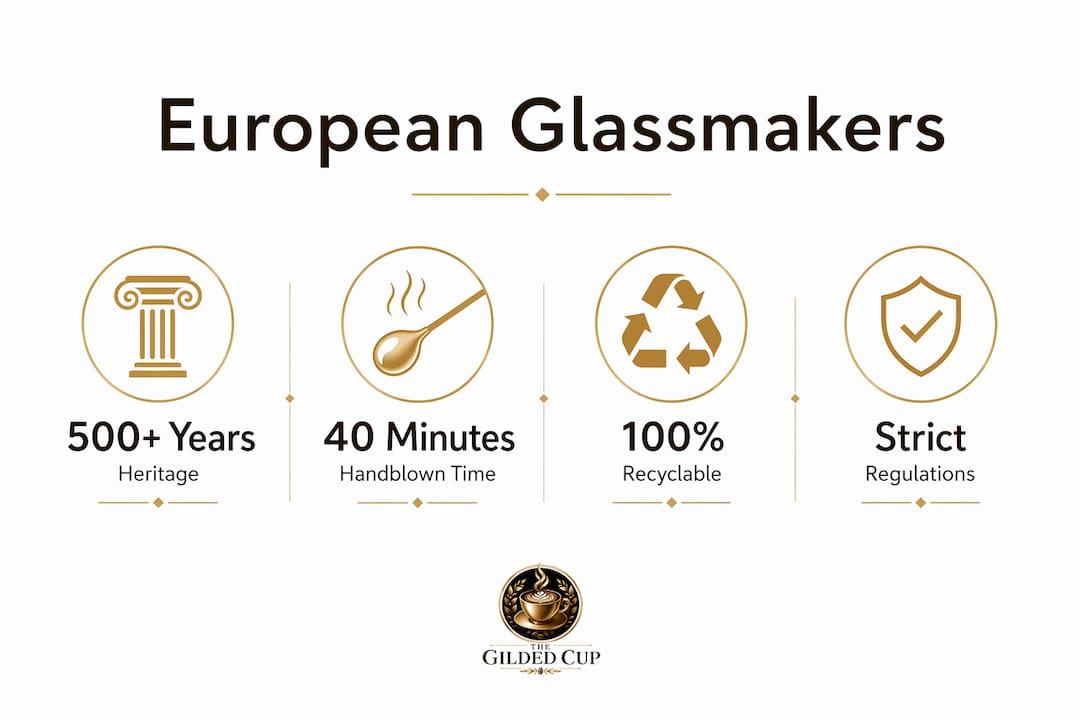
European glassmaker craftsmanship is built on techniques that machines cannot replicate. The most defining of these is freehand, moldless glassblowing, where a master artisan shapes molten glass entirely by breath, rotation, and touch. Master glassblowers spend around 40 minutes on a single moldless piece. That time investment produces a glass with subtle, natural variation that collectors and designers recognize immediately as a mark of authenticity, not a flaw.
The philosophy behind this practice has a name: Wabi-Sabi, the Japanese concept of finding beauty in imperfection. European artisans have applied this same principle for generations, treating each slight asymmetry as evidence of human presence in the object. Industrial production, by contrast, targets uniformity. Every piece from a machine line looks identical, and that sameness is precisely what strips glassware of character.
Color work separates European studios further. Double and triple layering techniques fuse colored crystal onto a clear core, creating optical depth and light effects that surface painting cannot achieve. The result is glassware that shifts in appearance depending on the angle of light, a quality that interior designers use deliberately to animate a table setting or a display shelf.
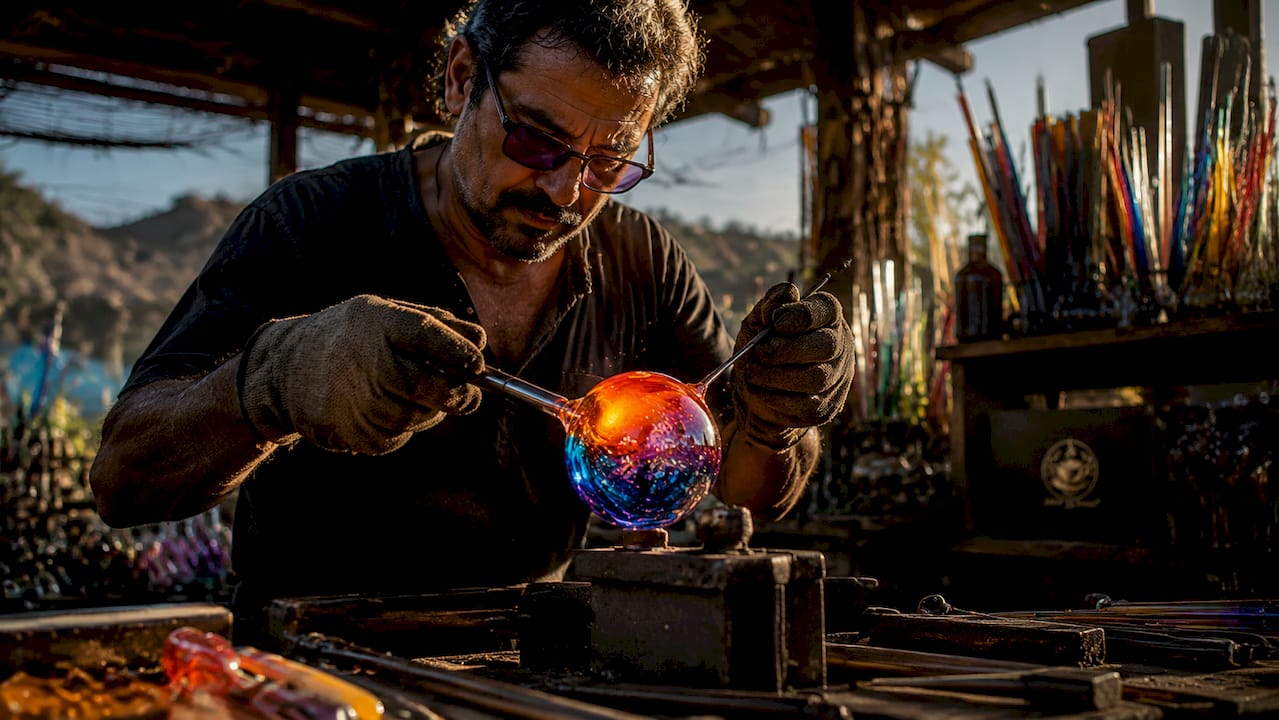
Skill transfer is the other critical factor. European glassmaking apprenticeships are long, structured, and built around muscle memory. A new artisan does not simply learn steps from a manual. They absorb timing, pressure, and breath control from a master over years of practice. This is how rare skills like mouth-blown flat glass survive at all.
Pro Tip: When evaluating a piece of European glassware, look for slight variations in wall thickness or a faint pontil mark on the base. These are signs of genuine handwork, not quality defects.
The contrast with industrial alternatives is not subtle. Entry-level glass products manufactured at scale prioritize speed and cost. European artisanal studios prioritize the object itself, and that priority shows in every finished piece.
How European glassmaking heritage shapes quality and cultural meaning
Heritage is not a marketing term in European glassmaking. It is a measurable, operational fact. Consider the following timeline of continuous production:
- La Rochère has operated since 1475, making it one of the oldest continuously running glassworks in the world. Its mouth-blown flat glass technique is a rare artisanal skill preserved through unbroken generational transfer.
- Cristallerie Royale de Saint-Louis, founded in 1586, produces crystal that has furnished royal courts and Michelin-starred restaurants alike. Its layering techniques are documented as part of French cultural heritage.
- Bohemia crystal from Central Europe carries a design tradition stretching back to the 17th century, with a reputation for clarity and light refraction that appeals to discerning buyers across both classic and contemporary interiors.
- Italy’s glass industry now counts 111 production sites, 16,500 employees, and EUR 3.2 billion in added value, making it the largest national contributor to European glass output. Industry employment rose 3% in 2025, signaling a sector that is growing, not declining.
This continuity matters for quality in a specific way. When a glassworks has operated for five centuries, its formulas for glass composition, its kiln temperatures, and its finishing methods have been tested and refined across thousands of production cycles. There is no shortcut to that level of accumulated knowledge.
For interior designers, European glassware carries what French design culture calls art de vivre, a phrase that translates roughly as the art of living well. A piece from Saint-Louis or La Rochère does not just hold a drink. It communicates a set of values about how a space is curated and how a host thinks about hospitality. That communicative quality is why heritage glass brands appear consistently in high-end residential and hospitality projects.
Why sustainability makes European glassmakers a responsible choice
European glassmakers lead the industry on environmental standards, and that leadership is structural, not voluntary. The European Union’s food contact materials directives and single-use plastics regulations apply to every producer operating in the region. Strict EU directives regulate food contact materials and single-use plastics, ensuring safety and traceability across the supply chain. For consumers buying glassware that will touch food and drink daily, this regulatory floor matters.
The industry is also moving aggressively on carbon reduction. European producers are transitioning to furnace electrification and increasing their use of post-consumer recycled glass, known as PCR cullet. Furnace electrification and PCR glass use mitigate 30% of carbon emissions from calcination, the chemical process that releases CO2 when raw materials are heated. That is a meaningful reduction in one of the hardest-to-decarbonize steps in glass production.
Glass itself is a circular material. It can be recycled indefinitely without losing quality, which aligns European glassmakers with the EU’s circular economy goals. The European glass industry plays a strategic role in the ecological transition, recognized formally under EU industrial policy. Buying European glass is not just an aesthetic choice. It is a vote for a supply chain that is accountable to climate targets.
Pro Tip: When sourcing glassware for a hospitality or design project, ask suppliers for their cullet ratio and furnace energy intensity figures. European producers track these metrics as standard compliance practice, and the numbers tell you exactly how seriously a manufacturer takes its environmental commitments.
| Sustainability factor | What European producers do |
|---|---|
| Carbon reduction | Furnace electrification and PCR cullet use cut calcination emissions by 30% |
| Regulatory compliance | EU food contact and single-use plastics directives apply to all producers |
| Circular economy | Glass recycled indefinitely without quality loss, supporting EU climate goals |
| Traceability | Cullet ratio, energy intensity, and pass rates tracked as standard metrics |
What practical advantages do consumers and interior designers gain?
Choosing European glassware delivers concrete, day-to-day benefits that go beyond aesthetics. The advantages are worth naming directly:
- Durability built into the object. Artisanal European glass is made to last. Products built to last support mindful consumption, reducing the cycle of replacement that cheap glassware demands. A well-made piece from a European studio can outlast decades of regular use.
- Design versatility across styles. Bohemia crystal bridges classic and contemporary design, offering depth, light-play, and clarity that industrial production cannot match. Interior designers use this quality to complement both historic interiors and minimalist modern spaces without the piece feeling out of place.
- Regulatory trust. Harmonized EU packaging and safety standards provide regulatory clarity that reduces product launch risk for hospitality buyers and gives individual consumers confidence in what they are putting on their table.
- Provenance you can verify. European glassware comes with traceable origin, a factor that matters for collectors and for anyone who wants to know the story behind an object. Thegildedcup’s glassware provenance guide explains exactly what to look for when assessing authenticity.
- Flexible sourcing options. European SMEs accommodate lower minimum order quantities and design-driven projects, while larger industrial producers handle high-volume precision work. This range means both individual buyers and hospitality operators can find a European supplier that fits their scale.
The practical case for European glass is strongest when you consider the total cost of ownership. A piece that lasts 20 years at a higher upfront price costs less per use than a cheap replacement cycle. That math is especially relevant for interior designers specifying glassware for long-term residential or hospitality installations.
Key Takeaways
European glassmakers are the definitive choice for fine glassware because they combine centuries of unbroken artisanal skill, strict EU regulatory standards, and a genuine commitment to sustainable production that no other region matches at scale.
| Point | Details |
|---|---|
| Artisanal technique is irreplaceable | Freehand moldless glassblowing takes 40 minutes per piece and produces character that machines cannot copy. |
| Heritage equals tested quality | Manufacturers like La Rochère and Saint-Louis have refined their methods across five centuries of continuous production. |
| Sustainability is structural | EU directives on food contact and carbon reduction apply to every European producer, not just the conscientious ones. |
| Design versatility is real | European crystal works in both classic and contemporary interiors, giving designers genuine flexibility. |
| Provenance adds lasting value | Traceable origin and verified craftsmanship make European glass a sound long-term investment for collectors and designers. |
The case for slowing down and choosing well
I have spent years handling fine glassware from across Europe, and the thing that still stops me is the moment you hold a piece from Saint-Louis or La Rochère up to the light. The layered color shifts. The wall thickness varies by a fraction of a millimeter. You can feel the breath of the person who made it, not metaphorically but almost literally, because the glass expanded under human lung pressure.
The conventional wisdom says that premium glassware is a luxury. I think that framing is exactly backward. Cheap glassware is the expensive choice when you account for replacement, for the aesthetic cost of objects that communicate nothing, and for the environmental cost of a supply chain with no accountability. European artisans have been solving this problem since the 15th century, and the solution has not changed: make it right, make it to last, and make it mean something.
What I find most underappreciated is the role of the apprenticeship system. The skills that produce a mouth-blown flat glass panel or a triple-layered crystal vase cannot be downloaded or automated. They live in the hands and lungs of people who trained under masters. Every time a studio closes or a tradition breaks, that knowledge is gone. Choosing European glassware is one of the few consumer decisions that directly funds the survival of a skill that took centuries to build.
For interior designers, I would add this: clients notice. A table set with artisan drinkware from a European studio reads differently than one set with mass-produced equivalents. The conversation it starts is worth more than the price difference.
— Sharbel
Thegildedcup’s curated European glassware collection
Thegildedcup brings together a carefully selected range of European glassware that reflects the traditions, craftsmanship, and design standards covered here. Each piece in the collection is chosen for its provenance, material quality, and the story it carries.
Whether you are a collector building a meaningful set, a designer sourcing pieces for a residential project, or a host who wants the table to say something, Thegildedcup’s luxury glassware collection offers verified European pieces with full transparency on origin and craft. The selection spans classic crystal forms and contemporary collaborations, giving you access to the full range of what European glassmaking produces at its best.
FAQ
What makes European glassmakers different from other producers?
European glassmakers combine centuries of unbroken artisanal tradition with strict EU regulatory standards. Techniques like freehand moldless blowing and crystal layering produce results that industrial manufacturing cannot replicate.
How long does it take to make a handblown European glass piece?
A single moldless, freehand blown piece takes a master glassblower around 40 minutes to complete. That time produces the natural variation and character that defines authentic artisanal glassware.
Are European glassmakers environmentally responsible?
European producers operate under EU food contact and single-use plastics directives and are transitioning to furnace electrification and post-consumer recycled glass. These changes cut calcination-related carbon emissions by 30%.
Can individual buyers access European glassmakers, or is it only for large orders?
European SMEs accommodate lower minimum order quantities and design-driven projects, making authentic European glassware accessible to individual collectors and small-scale designers, not just large hospitality operators.
Why does glassware provenance matter for collectors and designers?
Provenance confirms origin, artisanal method, and material composition, all of which affect both the object’s value and its longevity. Verified European provenance is a reliable indicator of quality and cultural authenticity.