

Luxury Glassware Cleaning Steps That Preserve Brilliance
Proper luxury glassware cleaning is a precise, hands-on routine that protects delicate crystal from cloudiness, chips, and permanent etching. A single dishwasher cycle can cause cloudiness and dulling that no detergent can reverse. The steps covered here follow expert guidance from Saint-Louis and Brilliant Crystal Cleaner, two authorities on fine crystal care, and apply equally to lead crystal, hand-blown stemware, and decorated pieces with gold or platinum accents. You will need nothing more than mild detergent, two plastic basins, a soft sponge, and microfiber cloths to protect glassware worth far more than the tools used to clean it.
What tools do you need for cleaning fine glassware?
The right materials are the difference between a safe wash and a costly chip. Gathering everything before you start prevents rushed handling mid-wash, which is when most accidents happen.
Detergent and water temperature
Use a pH-neutral, fragrance-free dish soap such as Dawn Free & Clear or Seventh Generation Free & Clear. Hot water causes thermal shock in thin crystal, so warm water at roughly 100°F is the correct temperature. Avoid anything labeled “antibacterial” or “degreasing,” since those formulas are too aggressive for fine glass surfaces.
Basins and protective surfaces
Two plastic basins are non-negotiable. One holds warm soapy water for washing; the other holds clean warm water for rinsing. Never wash luxury glassware directly in a kitchen sink, where hard faucet hardware and ceramic surfaces create collision risk. Line each basin with a folded rubber mat or a clean dish towel to cushion any accidental contact.
Cloths and sponges
Abrasive cloths and scrubbing sponges permanently scratch crystal surfaces, so they have no place in this process. Use only soft, lint-free microfiber cloths or a non-scratch cellulose sponge. Keep a separate set of cloths dedicated to glassware only. Cloths used for general kitchen cleaning carry residue that transfers to glass.
| Material | Recommended option | What to avoid |
|---|---|---|
| Detergent | pH-neutral, fragrance-free dish soap | Antibacterial or degreasing formulas |
| Sponge | Soft cellulose or microfiber sponge | Scrubbing pads, steel wool |
| Drying cloth | Lint-free microfiber cloth | Terry cloth, paper towels |
| Basin | Plastic basin with rubber mat lining | Ceramic sink, metal bowls |
| Water temperature | Warm, around 100°F | Hot or cold water |
What are the luxury glassware cleaning steps?
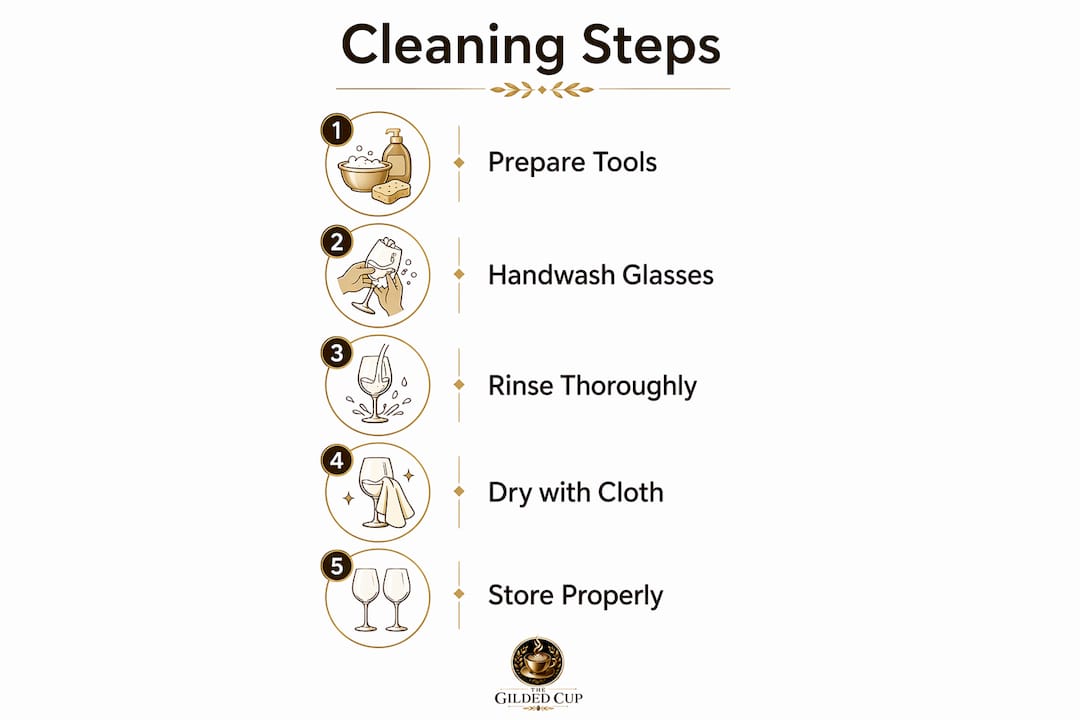
The industry term for this process is hand-care protocol, and it applies to every category of fine crystal and decorated stemware. The sequence below is the safest, most effective order for cleaning delicate glass items without stress fractures or surface damage.
-
Prepare your workspace. Fill the first basin with warm soapy water and the second with clean warm water. Place a rubber mat or folded towel at the bottom of each. Set your microfiber cloths within reach before you touch a single glass.
-
Handle one piece at a time. Handling one piece at a time prevents crowding and collision, which is the leading cause of chips during washing. Hold each glass by the bowl, never by the stem. The stem is the most fragile point on any wine glass or flute, and gripping it during washing applies uneven pressure.
-
Wash gently with sponge and detergent. Dip your soft sponge into the soapy basin and work in slow, circular motions across the bowl, rim, and base. Saint-Louis experts recommend using a soft sponge with mild detergent and avoiding any abrasive tools entirely. Pay extra attention to the interior of the bowl where wine tannins and residue collect.
-
Rinse in the clean water basin. Move the glass to the second basin and swirl it gently in clean warm water. Do not pour water forcefully into the bowl. The goal is to remove all soap residue without thermal shock or mechanical stress.
-
Inspect before drying. Hold the glass up to natural light or a lamp. Any remaining residue or cloudiness will show clearly at this stage, and it is far easier to re-rinse now than to deal with dried water spots later.
Pro Tip: Partition your two basins on opposite sides of your counter so you always move glasses in one direction: wash to rinse to drying cloth. This single spatial habit eliminates the back-and-forth motion that causes most accidental knocks.
Handwashing gives you control over pressure, temperature, and handling that no dishwasher can replicate. Dishwashers apply harsh detergents and high heat that etch crystal surfaces permanently. Once etching occurs, no amount of polishing restores the original clarity.
How should you dry and polish luxury stemware?
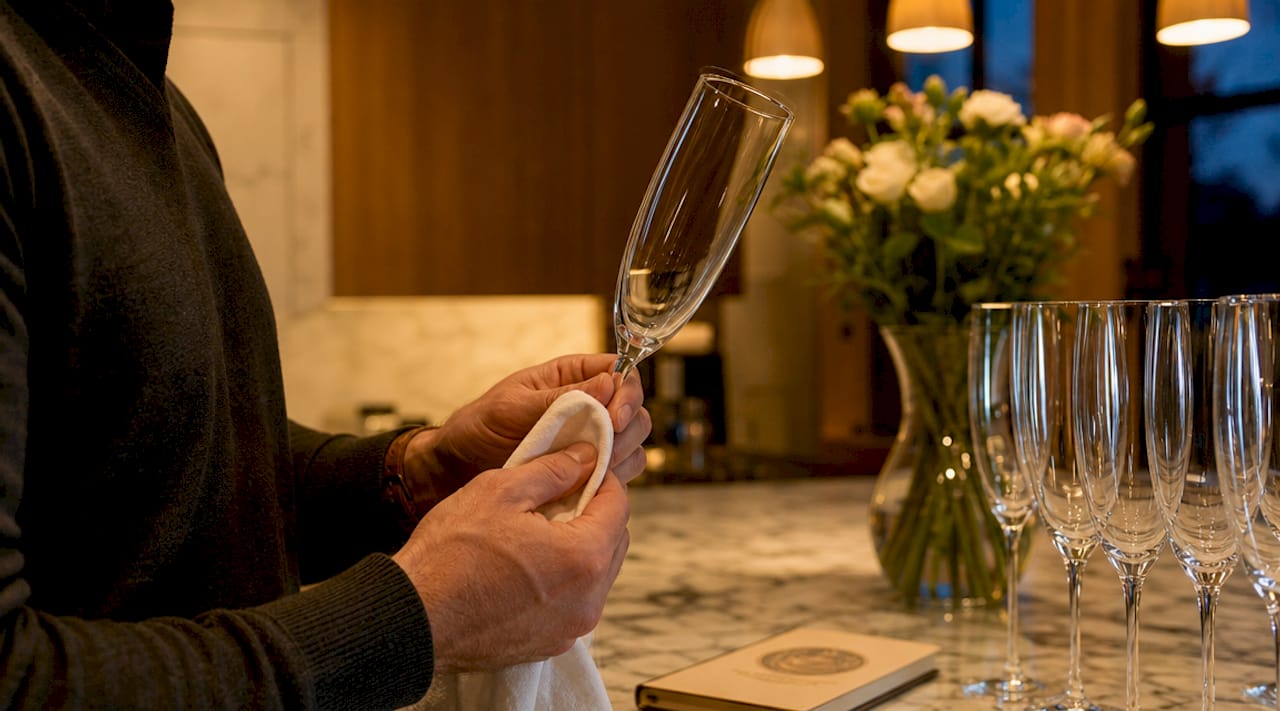
Drying is where most people lose the gains made during careful washing. Air drying sounds passive and safe, but it is actually the fastest route to water spots. Blotting immediately with a microfiber towel after rinsing prevents mineral deposits from drying onto the surface and maintains the clarity you just worked to restore.
Grip and hold during polishing
The grip you use during drying directly affects stem durability. Hold each glass by the bowl and use your other hand to gently blot the exterior with a microfiber cloth. Never twist the stem while polishing. Twisting applies rotational stress at the joint between bowl and stem, which is the most common point of fracture in fine crystal.
Vinegar rinse for sparkle and stain removal
Hard water leaves lime deposits and tannin discoloration that soap alone cannot remove. A short soak in a solution of white vinegar and warm water dissolves these deposits without scratching. Saint-Louis advises a vinegar soak of a few minutes followed by an immediate rinse in clean water. The key word is immediate. Leaving vinegar on crystal longer than five minutes risks surface dulling.
Pro Tip: Never use the vinegar soak on glassware decorated with 24-carat gold or platinum. Acidic solutions dissolve metallic decorations. Check the base of each piece for decoration markings before choosing your cleaning method.
- Blot, do not rub. Rubbing creates micro-scratches on polished surfaces.
- Work from the base upward to avoid re-wetting already-dried sections.
- Use a second dry cloth for final polishing once the glass is moisture-free.
- Hold finished glasses by the stem only after they are completely dry and you are placing them in storage.
How should you store luxury glassware to prevent damage?
Storage is the final step in proper glassware maintenance, and it is where long-term damage most often originates. A glass that survives careful washing can still chip or crack from poor storage habits.
Saint-Louis recommends storing crystal upright on its feet with space between each piece. Storing glasses upside down traps moisture inside the bowl, creates rim pressure on the most fragile edge, and causes musty odors over time. Stacking glasses inside one another is equally damaging, since the weight of upper pieces chips the rims of lower ones.
Decanter care and storage
Decanters require a specific approach because of their narrow necks and large interior surface area. Rinse your decanter immediately after use and always dry it with the stopper removed. Replacing the stopper before the interior is fully dry traps moisture and creates conditions for mold and permanent staining. Never store wine or spirits in a crystal decanter long-term, since prolonged contact with alcohol leaches minerals from the crystal and causes irreversible cloudiness.
| Storage method | Safe or risky | Reason |
|---|---|---|
| Upright on feet, spaced apart | Safe | Prevents rim pressure and chipping |
| Upside down on shelf | Risky | Traps moisture, stresses rim |
| Stacked inside each other | Risky | Upper weight chips lower rims |
| Decanter stored with stopper in | Risky | Traps moisture, causes mold |
| Decorated pieces wrapped in soft cloth | Safe | Protects gold/platinum from contact damage |
Special care for decorated and gilded pieces
Glassware with gold or platinum decoration requires extra separation in storage. Wrap each decorated piece individually in acid-free tissue paper or a soft microfiber cloth before placing it on a shelf. Metal decoration scratches easily when pieces touch, and those scratches are permanent. If you own collector-grade bar glasses, treating storage as seriously as washing protects both their function and their value.
Key takeaways
Proper luxury glassware care requires handwashing with mild detergent, immediate microfiber drying, and upright storage with space between pieces to prevent permanent damage.
| Point | Details |
|---|---|
| Always handwash | Dishwashers cause permanent etching and cloudiness that no polish can fix. |
| Use two basins | Separate wash and rinse basins prevent chips and reduce soap redeposition. |
| Dry immediately with microfiber | Air drying leaves mineral deposits; prompt blotting preserves clarity. |
| Hold by the bowl, not the stem | Gripping the stem during washing or drying causes stress fractures at the joint. |
| Store upright with space between pieces | Upside-down or stacked storage chips rims and traps moisture over time. |
Why I think most people overcomplicate glassware care
Most people either ignore proper care entirely or convince themselves they need an expensive specialty kit to do it right. Neither is true. After years of handling fine crystal and working with collectors who own pieces worth thousands of dollars, the pattern I see most often is this: the damage happens in the first thirty seconds of washing, not because someone used the wrong product, but because they rushed.
The dishwasher temptation is real. After a dinner party, a sink full of crystal stemware feels like a problem that a machine should solve. But dishwasher damage to fine crystal is cumulative and invisible at first. By the time you notice the cloudiness, the etching is already permanent. That is the part no one tells you clearly enough.
What actually works is a simple, unhurried routine. Two basins, a soft sponge, a microfiber cloth, and the discipline to wash one glass at a time. If you want to set a luxury table that genuinely impresses, the glassware needs to be spotless and unscratched. That outcome comes from the sink, not the cabinet.
The most underrated step is the vinegar rinse for hard water cloudiness. Most people assume cloudy crystal is ruined. In many cases, a five-minute white vinegar soak brings it back completely. The distinction between reversible hard water deposits and permanent dishwasher etching is worth knowing before you give up on a piece.
Luxury glassware rewards patience. Treat each piece as the object it is, not as a chore to finish, and it will stay brilliant for decades.
— Sharbel
Explore Thegildedcup’s curated glassware collection

Thegildedcup carries a curated selection of luxury crystal stemware, decanters, and fine drinkware chosen for both beauty and durability. Every piece on the platform is suited to the hand-care routine described in this guide, from everyday wine glasses to collector-grade crystal with gold decoration. Browse the full collection at Thegildedcup to find stemware that rewards proper care with decades of brilliance. If you are building a home bar or selecting pieces for gifting, the designer glassware guide on the site explains how material and craftsmanship affect both performance and longevity.
FAQ
Can you put luxury crystal glassware in the dishwasher?
No. Dishwashers cause cloudiness, dulling, and chipping through harsh detergents and high heat. The resulting etching is permanent and cannot be reversed by any cleaning product.
What is the best way to clean stemware without leaving water spots?
Dry each glass immediately after rinsing using a lint-free microfiber cloth, blotting rather than rubbing. Air drying increases the risk of mineral deposits settling on the surface as water evaporates.
How do you remove cloudiness from crystal glassware?
Soak the glass for a few minutes in a solution of white vinegar and warm water, then rinse immediately in clean water. This method removes lime and tannin deposits but should not be used on pieces with gold or platinum decoration.
How should you hold crystal glasses while washing?
Always hold the glass by the bowl, not the stem. Gripping the stem during washing or drying applies uneven pressure at the most fragile joint and is the primary cause of stress fractures in fine crystal.
How often should luxury glassware be cleaned?
Wash each piece after every use and never let residue dry inside the bowl or decanter. Immediate rinsing after use, especially for decanters, prevents staining and makes the full cleaning process significantly easier.