

Why Collect Rare Glassware: Value, History, and Beauty
Few collections carry the weight of human history the way rare glassware does. When you pick up a piece of Depression-era glass, you are holding something that sat on a kitchen table during one of the hardest decades America ever faced. That is not decoration. That is a story. Understanding why collect rare glassware goes well beyond aesthetics. It connects you to artisan traditions, cultural shifts, and financial opportunity that most collectors never fully appreciate until they are already hooked. This guide breaks down what drives serious collectors, what makes a piece truly rare, and how you can build a collection that is meaningful and smart.
Table of Contents
- Key Takeaways
- Why collect rare glassware: what actually makes it worth pursuing
- Historical and cultural significance of rare glassware
- The real benefits of collecting rare glassware
- How to build a rare glassware collection that lasts
- My take on what rare glassware actually gives you
- Explore Thegildedcup’s curated glassware collections
- FAQ
Key Takeaways
| Point | Details |
|---|---|
| Rarity follows six criteria | Condition, maker reputation, production rarity, color, age, and set completeness all shape a piece’s value. |
| History amplifies worth | Glassware tied to specific eras or social movements holds deeper cultural meaning beyond market price. |
| Condition is critical | Damaged pieces can sell for only 10 to 20% of a mint condition price, so examine before you buy. |
| Personal connection matters | Niche collections built around genuine interest consistently outlast trend-chasing in satisfaction and value. |
| Authentication protects you | Reproductions are common, especially in Depression glass, so learn the signs before spending serious money. |
Why collect rare glassware: what actually makes it worth pursuing
The reason people collect rare glassware is almost never one thing. It is a combination of historical weight, physical beauty, and the genuine thrill of the hunt. But before you can appreciate why the pursuit matters, you need to understand what puts the word “rare” in front of glassware in the first place.
Six factors determine value in collectible glassware: condition, manufacturer reputation, rarity of production, color, age and authenticity, and whether a set is complete. Each factor interacts with the others. A piece made by a respected manufacturer in a short production run still loses significant value if it is chipped. A beautifully preserved piece from a mass-production line can command high prices if collectors happen to be chasing that pattern right now.
Here is what each factor actually means in practice:
- Condition: Chips, cracks, and heavy scratches reduce value sharply. Damaged rare glass may fetch only 10 to 20% of the mint condition price, which means condition assessment is non-negotiable before any purchase.
- Manufacturer reputation: Pieces from storied makers like Fenton Art Glass, Tiffany Studios, or Steuben carry built-in prestige that drives collector demand regardless of age.
- Production rarity: Limited-run items, experimental colors, and patterns discontinued after short runs consistently hold higher value. Items with unusual colors or limited-production batches hold the highest consistent prices in auction records.
- Color: Unusual color variants of common patterns are among the most sought-after finds. A standard amber piece might sell for $10. The same mold in a rare teal or cobalt from a limited run? Hundreds or more.
- Age and authenticity: Older pieces must be verified. Maker’s marks, pontil marks on the base, and glass composition all help establish genuine age.
- Set completeness: A matched set of eight Depression glass dinner plates commands far more than eight unrelated plates of the same pattern.
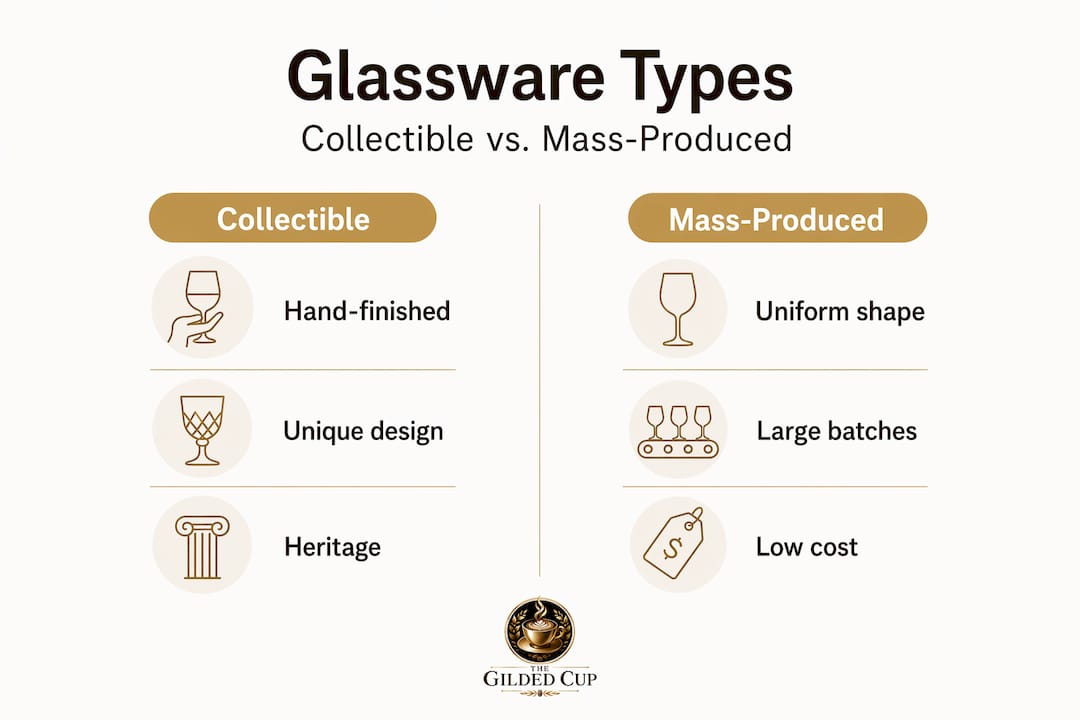
The difference between mass-produced glass and collectible glass often comes down to intention. Mass production prioritizes speed and uniformity. Collectible glassware, even when originally produced at scale, carries distinguishing features that make individual examples stand apart.
Pro Tip: Learn to read pontil marks on the base of older glass. A rough, unpolished pontil scar indicates hand-finishing, a strong signal of age and hand production that significantly increases authenticity confidence.
Reproductions are the single biggest trap in this hobby. Reproduction Depression glass is common, and signs include inconsistent color saturation, crude pattern detail, and the absence of any manufacturing marks. A piece that looks suspiciously perfect without any signs of age should raise your skepticism, not your excitement.
Historical and cultural significance of rare glassware
One of the most underrated reasons why collecting vintage glass becomes a lifelong pursuit is the cultural weight each piece carries. You are not just buying an object. You are buying a record of how people lived, what they valued, and what they could afford at a particular moment in time.
Depression glass is the most accessible example of this principle. Produced in the 1920s and 1930s, it was mass-produced for everyday households during a period of severe economic hardship. Manufacturers gave it away with cereal boxes and oatmeal containers. It was utilitarian, not luxurious. Yet today it is among the most actively collected categories in American glass history.
Why? Because context transforms meaning. Those cheery colors offered comfort during hard economic times, and that emotional resonance has never fully faded. When you hold a pink Mayfair serving bowl, you are touching something that held food for a family that had very little. That story is embedded in the glass.
“The most powerful collections are not assembled around price guides. They are built around genuine curiosity about the people who made and used these objects.” This is the conviction that separates collectors who build lasting collections from those who accumulate inventory.
Beyond Depression glass, the history of rare glassware tracks the evolution of American design itself. Mid-century barware reflects post-war optimism and the rise of the home entertaining culture. Art Nouveau pieces from the early 1900s mirror a society reacting against industrialization by embracing organic, handcrafted beauty. Each era left its signature in glass, and collecting across periods gives you a physical timeline of American taste and craftsmanship. Thegildedcup’s collector’s guide on vintage glassware covers patterns and auction highlights that show exactly how this historical arc plays out in today’s market.
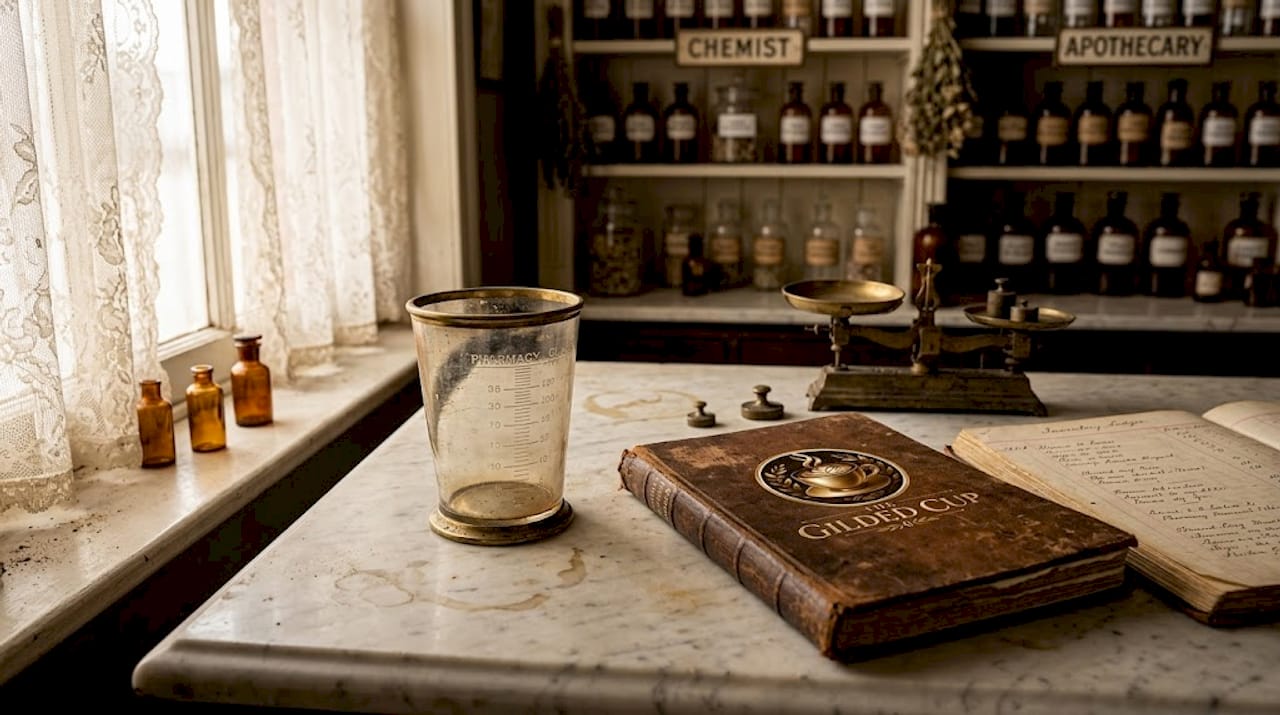
Regional pieces add another layer. A pharmacy measuring glass from a small-town apothecary in the 1890s tells a story that a Waterford crystal goblet simply cannot. Niche collections like advertising glass provide personal and historical insight that no luxury item can replicate. That specificity is exactly what makes certain collectors fiercely loyal to their categories.
The real benefits of collecting rare glassware
There is a version of this hobby that exists entirely on spreadsheets: market prices, auction results, trend analysis. That version misses the point. The sensory experience of vintage glass is central to why collectors keep collecting. The weight, balance, and feel of well-made glass is genuinely different from modern production pieces. You notice it the moment you hold a pre-war crystal coupe versus a contemporary import.
The practical benefits of collecting break into a few distinct categories:
- Aesthetic and home value: A well-curated display of colored Depression glass or Art Deco barware transforms a shelf from storage into a statement. Rare pieces enhance entertaining and add visual depth that no purchased decoration can replicate.
- Financial appreciation: Growing national interest has raised prices significantly on vintage glassware. Items formerly found for cents are now sought after at top-tier prices. A circa 1825 to 1835 Columbia/Eagle flask sold for $177,840 in a 2026 auction, reflecting just how far serious rare glass investment can go.
- Community: The glassware collecting world has a genuinely generous culture. Collector clubs, online forums, and antique shows are places where knowledge is shared freely and friendships form around shared obsession.
- Elevated daily rituals: Serving wine in a hand-blown 1930s crystal stem or coffee in a piece with real provenance turns an ordinary morning into something you notice. Quality vintage barware combines durability with artistic weight and balance, designed for long-term use. It is functional beauty.
Pro Tip: Start by using your collection. Display it, drink from appropriate pieces, and let it become part of your daily life. Collectors who engage with their pieces consistently develop sharper instincts for quality than those who store everything in boxes.
Market trends fluctuate, making some categories more sought after at certain times than others. This means ongoing education matters more than locking into one price guide and treating it as permanent truth.
How to build a rare glassware collection that lasts
Building a collection you are proud of requires patience, discipline, and some honest self-reflection about what you actually love versus what you think you should love.
- Buy from trusted sources. Estate sales, reputable antique dealers, and established auction houses give you access to genuine pieces with traceable histories. Online marketplaces can work, but they require significantly more verification. Do not let a bargain price override due diligence on authenticity.
- Assess condition with discipline. Minor wear like gentle scratches and light gold rim wear are expected and often add character. Structural damage like chips and cracks is a different matter entirely. Learn to distinguish age-related patina from genuine damage. Thegildedcup’s guide on glassware patina is a good starting point for understanding this distinction.
- Verify provenance and authenticity. Research the piece’s manufacturer, production era, and any identifying marks. Cross-reference with collector references, pattern guides, and auction records. When in doubt about a Depression glass piece, beware of reproductions that look suspiciously flawless.
- Focus on a niche. Trying to collect everything produces a cluttered, unfocused result. Choose a category that genuinely excites you, whether that is Depression glass, mid-century barware, American art glass, or niche advertising glass. Depth in one area builds expertise faster than breadth across many.
- Keep records from day one. Document where you bought each piece, the price paid, the condition at purchase, and any provenance information. A well-maintained record transforms a collection into an asset and makes insurance, resale, and estate planning significantly easier.
- Engage with collector communities. Local antique shows, national collector clubs, and online groups are where you learn the fastest. Experienced collectors share knowledge that no book fully captures, and relationships built in these spaces lead to private sales and finds that never reach public listings.
Pro Tip: Set a written focus statement for your collection before you spend your first dollar. One sentence describing exactly what you collect prevents impulse purchases that dilute the collection’s coherence and resale value.
My take on what rare glassware actually gives you
I have watched people enter this hobby with a spreadsheet and leave it with a passion, and I have watched the reverse happen too. The collectors I respect most are not the ones with the most expensive pieces. They are the ones who can tell you exactly why a specific amber Hocking Glass pitcher matters more to them than a more valuable piece they passed on.
In my experience, the turning point for most collectors comes when they stop asking “what is this worth?” and start asking “what is this?” The shift from market logic to genuine curiosity is when collecting becomes something that actually enriches your life rather than just your shelves.
I will say something that contradicts a lot of advice you will find in price guides: perfect condition is overrated. Not for the top tier of the market, but for the collector building a collection that tells a story. The light wear on a 1930s green glass tumbler tells you that someone used it, washed it, put it away, and used it again for decades. That is not damage. That is history made visible. Worrying too much about perfect condition often steers collectors away from the most historically interesting pieces toward objects that look good in photographs but say very little.
What rare glassware gives you, at its best, is a reason to pay attention. To history, to craft, to the people who came before you. That is not a small thing. It is the reason serious collectors rarely stop.
— Sharbel
Explore Thegildedcup’s curated glassware collections
If this article has deepened your interest in fine and collectible glassware, Thegildedcup is where that interest finds a home. The platform curates a selection of quality drinkware with the same attention to craftsmanship and authenticity that serious collectors demand. From everyday drinking vessels with genuine character to pieces worth featuring in a display collection, the catalog is built for people who know the difference between glassware that is merely functional and glassware that means something. Browse the enamel mug collection for beautifully crafted pieces that honor traditional form, or visit the collaborations page for limited-edition offerings that serious collectors will want to know about.
FAQ
What defines rare glassware for collectors?
Rare glassware is defined by six primary factors: condition, manufacturer reputation, production rarity, color, age and authenticity, and set completeness. Items with unusual colors or limited-production runs consistently command the highest prices.
Is rare glassware a good investment?
It can be. A Columbia/Eagle flask sold for $177,840 at auction in 2026, and growing collector demand has pushed prices on formerly undervalued vintage glass to record highs. Research and patience are both required to invest successfully.
How do I identify genuine rare glass versus a reproduction?
Genuine pieces typically show consistent color, crisp pattern detail, and age-appropriate wear. Reproductions often display inconsistent color, crude patterns, or no maker’s marks. Be especially cautious with Depression glass, where fakes are common.
What is the best way to start collecting vintage glassware?
Start by choosing one niche category based on genuine personal interest, buy from reputable sources like estate sales and established dealers, and document every purchase from the beginning. Engaging with collector communities accelerates learning faster than any single resource.
Does minor wear reduce the value of a rare glass piece?
Minor wear like light scratches or small rim wear is expected and often adds character and authenticity. Structural damage like chips and cracks does reduce value significantly, sometimes to 10 to 20% of mint condition price.