

The luxury dinner party guide for elegant hosting
Hosting a luxury dinner party isn’t just about cooking impressive food. It’s about orchestrating an evening where every detail — from the first glass poured to the final course cleared — feels unhurried, considered, and genuinely special. This hosting a luxury dinner party guide walks you through the exact methods that separate a polished event from a stressful one: timeline engineering, elegant table settings, atmosphere design, and the kind of labor relief that lets you actually enjoy your own party. Research shows the ideal size is five to eight guests for optimal engagement and conversation. Start there, then build everything else around it.
Table of Contents
- Plan your luxury dinner party backwards from the serve time
- Build a timeline starting two weeks out for flawless execution
- Master elegant table settings and glassware placement
- Create an inviting atmosphere with lighting, music, and scent
- Effortless hosting: labor relief and day-of execution tips
- Rethinking luxury dinner parties: when hosting feels effortless
- Elevate your hosting with The Gilded Cup’s luxury tableware and bar accessories
- Frequently asked questions
Key Takeaways
| Point | Details |
|---|---|
| Perfect guest count | Inviting five to eight guests creates the ideal atmosphere for an elegant dinner party. |
| Backward planning | Scheduling all cooking backwards from serve time avoids appliance conflicts and stress. |
| Fine tableware etiquette | Arranging flatware and glassware according to fine dining standards guides a seamless meal experience. |
| Ambiance matters | Warm lighting, appropriate music, and neutral scents elevate guest comfort significantly. |
| Labor relief is luxury | Hiring help or prepping early ensures the host stays present and the event feels effortless. |
Plan your luxury dinner party backwards from the serve time
The most common mistake hosts make isn’t a bad recipe. It’s a collision of three dishes all needing oven time at the same moment, fifteen minutes before guests sit down. Avoiding this is the foundation of any upscale entertaining guide worth following.
Planning backwards from your serve time, then assigning each task to a specific kitchen appliance, is how you expose those conflicts before they happen. Pick your target dinner hour — say, 7:30 PM — and work in reverse.
Here’s how to structure that thinking:
- Set the anchor. Write “Dinner: 7:30 PM” at the top of a page. Everything else flows from here.
- List every dish and its requirements. Include prep time, cook time, and any resting period (a braised short rib needs 20 minutes to rest before slicing).
- Assign appliances. Map each dish to oven, stovetop, sous vide, or countertop. Note temperature requirements and flag conflicts.
- Resolve collisions. Anything that causes an overlap gets shifted to day-before prep or adapted to a different method.
This appliance-mapping step is something most hosts skip entirely. It’s the difference between confident execution and frantic improvisation.
| Dish | Prep time | Cook time | Appliance | Conflict? |
|---|---|---|---|---|
| Braised short rib | 30 min | 3.5 hrs | Oven at 325°F | No |
| Roasted root vegetables | 15 min | 45 min | Oven at 400°F | Yes — adjust timing |
| Seared scallops | 10 min | 6 min | Stovetop | No |
| Chocolate fondant | 20 min | 12 min | Oven at 400°F | Prep day before |
Pro Tip: Dishes that are forgiving about temperature (like braises or confit) can often share oven space with something higher-heat if timed correctly. A dual-zone oven makes this even easier, but thoughtful scheduling solves it without one.
Pairing thoughtful kitchen logistics with the right luxury bar accessories for your pre-dinner drinks station means guests arrive to an experience that already feels effortless, even before they sit down.
Build a timeline starting two weeks out for flawless execution
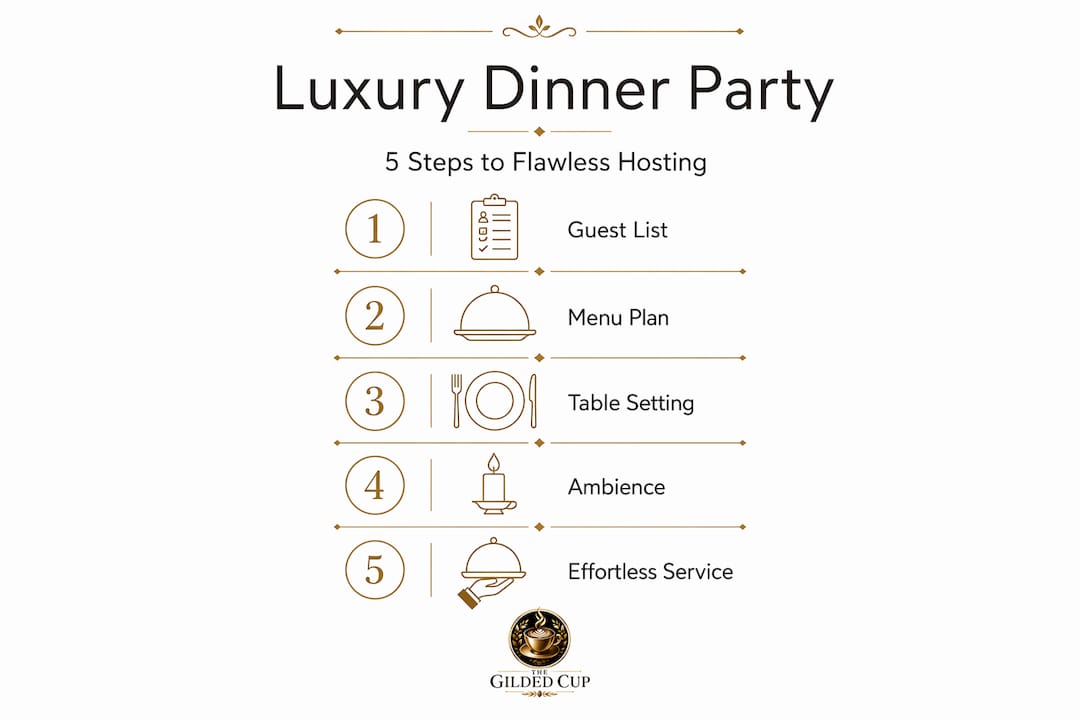
With your cooking schedule mapped, the preparation phases that lead up to the event deserve the same rigor. Starting two weeks out with invitations and menu planning, testing recipes ahead of time, finalizing groceries three days before, and prepping the day prior is what separates hosts who feel calm on the night from those who don’t.
Here’s a phase-by-phase breakdown:
- Two weeks before. Send invitations. Finalize your guest list with dietary needs and restrictions noted. Confirm your menu is achievable in your kitchen, not just theoretically appealing.
- One week before. Confirm RSVPs. Cook through at least one technically complex dish — a sauce, a pastry, anything that could surprise you. Identify what needs adjusting.
- Three days before. Complete your grocery run for non-perishables. Finalize your music playlist and test your lighting setup. Walk through the dining room with fresh eyes.
- Day before. Prep all components you can: brines, marinades, sauces, pastry doughs. Set your table completely. Arrange bar stations with proper quality home barware in place.
Key items to confirm in the final 48 hours:
- All glassware polished and placed
- Bar station stocked and organized
- Any hired help briefed and confirmed
- A printed or digital day-of schedule for yourself
- Dessert fully prepped or purchased and stored
Pro Tip: Never introduce a recipe you’ve never made before on the night. That single rule eliminates about 80% of dinner party disasters before they start.
Master elegant table settings and glassware placement
Now comes the visual layer of the event. A precisely set table communicates care before anyone has touched their fork. More than decoration, formal place settings encode course progression so guests always know where they are in the meal.
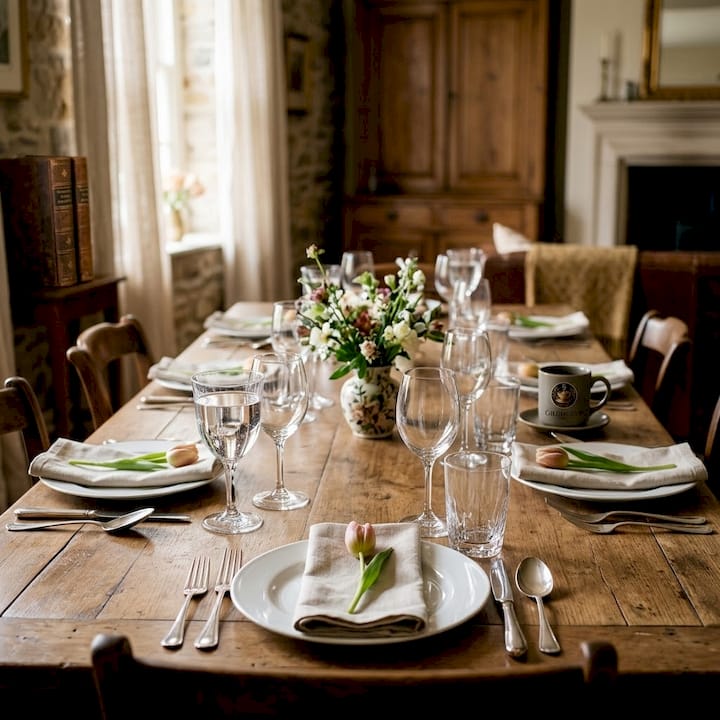
The logic of flatware is straightforward: pieces are placed in the order of use, working from outside in toward the plate. Salad fork outermost left, dinner fork inside it. Soup spoon outermost right, then dinner knife inside.
Glassware follows what fine dining professionals call a sequence grammar for placement: water glass sits directly above the dinner knife; white wine glass is placed closest to the right of the water glass; red wine glass goes behind and to the right of white; a champagne flute, if used, sits at the far right.
Key principles for glassware selection:
- Prioritize hospitality-grade over decorative. A glass that looks beautiful but chips at the stem after two uses is a liability, not an asset.
- Favor thinner rims. Wine professionals genuinely prefer them because they don’t interrupt the flow from glass to lip.
- Consider stem height. For red wine, taller stems keep hands off the bowl and maintain temperature longer.
- Consistency matters more than matching sets. A cohesive aesthetic with slight variation reads as curated. Mismatched styles from different eras read as an afterthought.
| Style | Glassware types set | Best for |
|---|---|---|
| Formal multi-course | Water, white wine, red wine, champagne | Six-course tasting menus |
| Modern progressive | Water and one versatile wine glass | Four-course relaxed fine dining |
| Contemporary minimalist | One all-purpose wine glass, water | Casual luxury, conversation-focused |
Investing in bespoke drinkware goes further than aesthetics. When guests notice the quality of what’s in their hands, it signals that the entire evening has been considered at that level of detail.
Pro Tip: Polish every glass with a lint-free microfiber cloth immediately before setting the table. Even glasses stored clean pick up dust and fingerprints. This single step elevates the table’s appearance significantly.
Create an inviting atmosphere with lighting, music, and scent
The table is set. Now we work on what guests feel when they walk in. Soft warm lighting and slow-tempo music genuinely relax guests, enhance perceived taste, and extend the meal. Strong non-food scents, meanwhile, actively compete with and detract from the dining experience.
The room should feel like it was always going to be this way. Not decorated. Not prepared. Just naturally, inevitably right.
Practical elements to address:
- Lighting. Remove overhead fluorescents from the equation entirely. Layer table candles, dimmable pendants, and floor or wall accent lighting. Aim for warm white (2700K or below) across every source.
- Music. Tempo matters more than genre. Slower BPM tracks, whether jazz, classical, or ambient electronic, encourage slower eating, longer lingering, and deeper conversation. Keep volume low enough that guests don’t have to raise their voices.
- Scent management. Unscented or very subtly scented candles at the table. Save any signature home fragrance for the entryway or hallway, not the dining room itself. Herbs like rosemary or thyme from your cooking are far better dining-room scents than any candle.
- Speaker placement. Discreet positioning of speakers in corners maintains even sound distribution without drawing attention to the source.
For cocktail hour, the right cocktail serving presentation sets the tone before guests reach the table. How a drink is presented in those first minutes shapes the entire evening’s register.
Pro Tip: Add a quiet, low-volume music source in the guest bathroom. It’s a small touch that most guests will never consciously notice, but it removes the social awkwardness of bathroom silence during a quiet moment in conversation.
Effortless hosting: labor relief and day-of execution tips
Everything above is preparation. This section is about the night itself, specifically about preserving your composure and presence when it matters most.
Finishing cooking approximately 30 minutes before guests arrive is the rule that changes everything. It gives you time to shower, dress, mentally shift from cook to host, and greet people properly rather than calling hello from behind a stove.
Day-of habits that protect your hosting experience:
- Build 15-minute buffer zones between key moments: arrival, first course, each course transition, dessert.
- Use kitchen timers aggressively. One timer per active dish. Don’t rely on memory on a busy night.
- Print or display your schedule somewhere visible in the kitchen. Refer to it, not your instincts.
- Brief any hired help on your plating expectations, pacing preferences, and signals before guests arrive.
Hiring professional support to handle food plating and cleanup isn’t outsourcing the experience. It’s how you stay present in it. A single server or even an experienced culinary student can manage plating and clearing while you engage at the table as a genuine host, not a kitchen manager in a nice outfit.
Keep these must-have bar glasses ready and pre-arranged so any helper you bring in can manage the bar station independently.
Pro Tip: Assign one trusted guest the informal role of “table champion.” They know to keep conversation flowing, signal you if something needs attention, and subtly manage pacing at their end of the table. Never underestimate the value of a well-chosen ally at the table.
Rethinking luxury dinner parties: when hosting feels effortless
Here’s something the conventional hosting advice won’t say directly: doing everything yourself is not a virtue. It is a liability.
There is a deeply held belief among many accomplished hosts that managing every element personally is a form of respect for guests, a demonstration of care. In practice, a host who is visibly tired, half-present, and mentally running kitchen logistics during dessert is not giving their guests more of themselves. They’re giving them less.
Real refinement in dinner party hosting looks like effortlessness. Not the effortlessness of actually doing nothing, but the effortlessness that comes from planning so thoroughly and delegating so intelligently that the work disappears from view entirely.
This matters for the quality home barware insights conversation too. Investing in proper tools and proper help are the same category of decision. Both are choices to eliminate friction. Both are choices that say the experience matters more than the performance of effort.
The hosts whose dinner parties people talk about for months afterward are not the ones who cooked six courses unassisted. They’re the ones who made every guest feel like the evening was designed specifically for them. That quality of attention requires presence. Presence requires not being in the kitchen.
Elevate your hosting with The Gilded Cup’s luxury tableware and bar accessories
Now that you have the planning frameworks, the table-setting conventions, and the hosting mindset in place, the final variable is what you put in your guests’ hands.
At The Gilded Cup, every piece is selected for exactly the occasions described in this guide: evenings where details matter and quality is felt before it’s articulated. Our enamel mugs bring an unexpected warmth to after-dinner coffee service, and our color inside mugs add a considered, distinctive touch to any tablescape. These are pieces designed to be used repeatedly without losing their character. Browse our full luxury mug collections to find the pieces that will make your next dinner party one guests remember every time they host one of their own.
Frequently asked questions
How many guests should I invite to a luxury dinner party?
The ideal size is five to eight guests to maintain intimate, energetic conversation without overwhelming the host or fragmenting into disconnected side discussions.
What is the best way to schedule cooking for multiple courses?
Work backwards from your serve time, assign each dish to a specific appliance, and resolve any timing collisions by shifting components to day-before prep or adapting cooking methods.
How should I arrange glassware for a formal dinner?
Place the water glass directly above the dinner knife; white wine sits to the right of water; red wine goes behind and to the right of white; a champagne flute, if included, goes at the far right.
What ambient elements improve guest comfort during a dinner party?
Warm low lighting and slow-tempo music create physical relaxation and enhance taste perception, while any strong non-food fragrance in the dining room actively works against the food experience.
Recommended
- Elegant bar accessories list: the affluent collector’s guide – The Gilded Cup
- Elevate Your Home Bar: 12 Must-Have Luxury Accessories - The Gilded – The Gilded Cup
- Step-by-step cocktail serving: master elegant presentation - The – The Gilded Cup
- Must-have bar glasses: the affluent collector’s guide – The Gilded Cup