

What Is Fine Porcelain: Characteristics and Collector Guide
Fine porcelain is defined as a vitrified, white-bodied ceramic material fired at high temperatures to produce a dense, non-porous body with characteristic translucency and a smooth glaze finish. The Cambridge Dictionary defines porcelain as a ceramic used for objects like teacups, with “fine” signaling superior quality rather than a separate recipe or category. Collectors, home decorators, and buyers encounter this term constantly, yet few understand what separates genuinely fine porcelain from ordinary ceramic ware. This guide breaks down the material science, the key comparisons, and the practical knowledge you need to buy, identify, and care for pieces that hold their value.
What is fine porcelain and what makes it different?
Fine porcelain is a high-grade ceramic composed primarily of kaolin, feldspar, and quartz, fired at temperatures typically between 1,200°C and 1,400°C. Encyclopedia Britannica states that porcelain differs from earthenware by being vitrified, non-porous, and sometimes translucent when thin. The word “fine” is not a regulated industry standard. It functions as a quality descriptor indicating higher-grade raw materials, more controlled firing, and superior finishing compared to standard ceramic production.
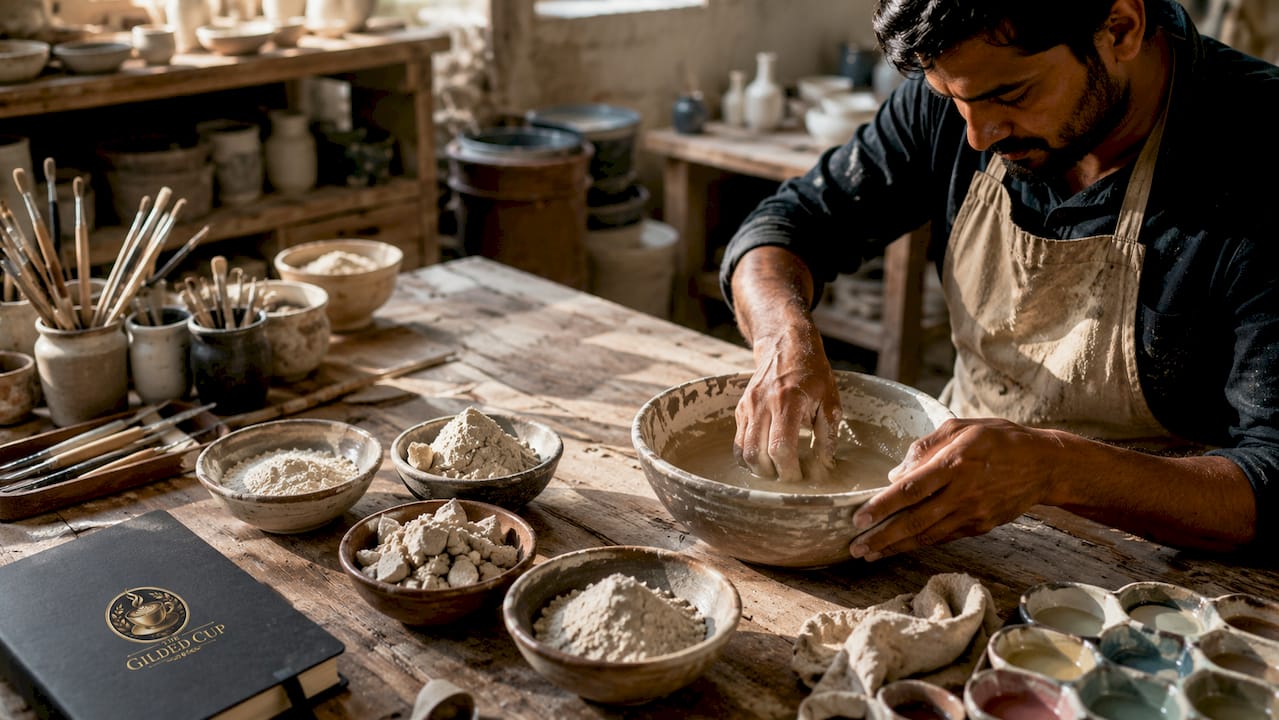
Not all porcelain qualifies as fine. The distinction lies in three converging factors: the purity of the clay body, the maturity of the firing process, and the consistency of the glaze application. A piece can be made from porcelain-grade materials and still fall short if the kiln temperature was inconsistent or the glaze was applied unevenly. This is why performance and finish should guide your judgment rather than marketing language alone.
What are the key material characteristics of fine porcelain?
The material profile of fine porcelain sets it apart from every other ceramic category. Four properties define it most clearly.
- Vitrification: High firing temperatures cause the clay minerals to fuse into a glass-like matrix. This makes the body dense, non-porous, and resistant to moisture absorption. A truly vitrified piece will not stain when exposed to liquids, which is why fine porcelain dinnerware outlasts earthenware by decades.
- Translucency: Hold a thin-walled fine porcelain cup up to a light source and you will see a soft, luminous glow through the walls. Translucency indicates high vitrification, with light diffusing softly through thin sections. This is one of the most reliable visual quality signals available to buyers.
- Whiteness: The refined kaolin clay used in fine porcelain fires to a bright, consistent white. This whiteness is not cosmetic. It reflects the purity of the raw materials and the absence of iron or other mineral contaminants that would cause discoloration.
- Glaze integrity: A defect-free glaze, smooth and uniform across the entire surface, is the finishing mark of quality. Flaws like pinholes or uneven coloration detract from both quality perception and long-term durability.
Pro Tip: Run your fingertip across the glaze surface of any piece you are considering. A fine porcelain glaze feels like polished glass. Any roughness, graininess, or irregularity signals a lower firing temperature or poor glaze application.
Understanding these features of premium ceramics helps you move past marketing claims and evaluate pieces on objective, measurable criteria.
Fine china vs fine porcelain vs bone china: what is the difference?
This is the comparison that confuses most buyers, and the differences are material, not cosmetic.
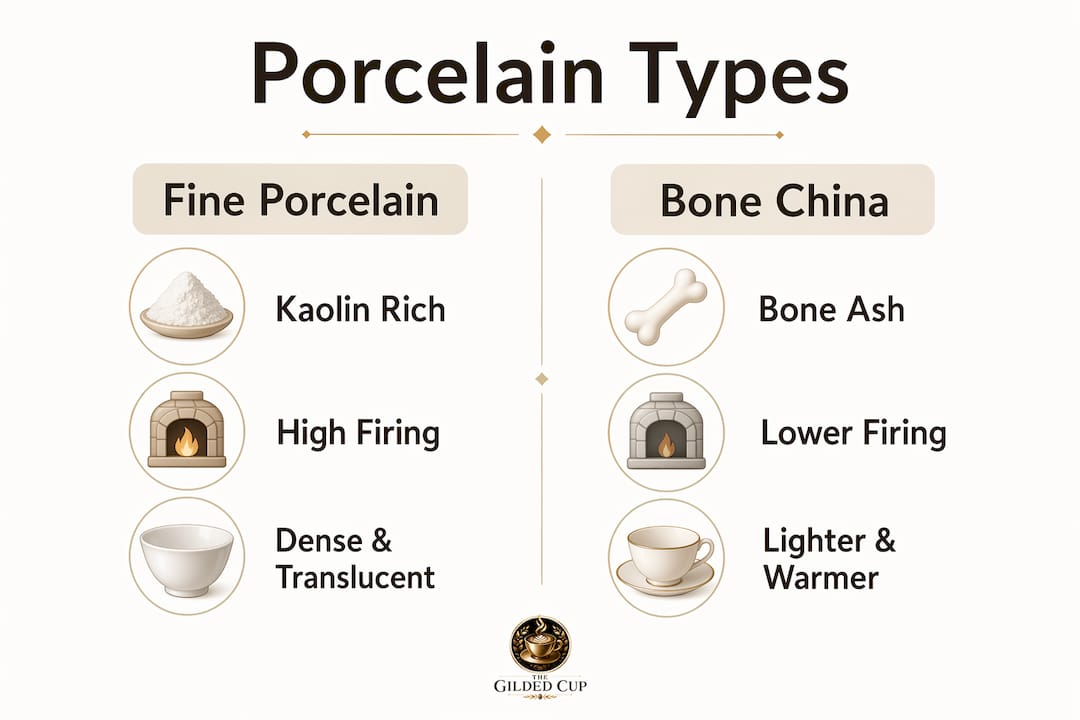
Fine china is porcelain fired at slightly lower temperatures than hard-paste porcelain. The result is a less dense body that is more susceptible to chipping. The term “china” historically referred to porcelain imported from China, and today it is often used interchangeably with porcelain in retail contexts, which adds to the confusion.
Bone china contains 40 to 50 percent bone ash derived from calcined animal bones, combined with kaolin and feldspar. This composition makes bone china lighter, warmer in tone, and more translucent than standard porcelain. Brands like Wedgwood and Royal Doulton built their reputations on bone china specifically because of these optical and tactile qualities.
Earthenware sits at the opposite end of the spectrum. It fires at the lowest temperatures, remains porous unless fully glazed, and is opaque throughout. Terracotta flower pots are earthenware. The gap between earthenware and fine porcelain is not a matter of degree. It is a fundamental difference in material behavior.
| Type | Composition | Translucency | Density | Typical use |
|---|---|---|---|---|
| Fine porcelain | Kaolin, feldspar, quartz | High (when thin) | Very dense, vitrified | Dinnerware, art objects, figurines |
| Bone china | Kaolin, feldspar, bone ash | Very high | Dense, lightweight | Premium tableware, gifting |
| Fine china | Kaolin, feldspar | Moderate | Moderately dense | Everyday and formal dinnerware |
| Earthenware | Low-grade clay | None | Porous, low density | Casual tableware, decorative pots |
The practical takeaway: if you want the most translucent and lightweight option for a formal table, bone china wins. If you want the most durable and chip-resistant body for regular use, hard-paste fine porcelain is the stronger choice.
How to identify authentic fine porcelain as a collector
Identifying genuine fine porcelain requires more than a visual scan. Four tests and checks will tell you what you need to know.
- The light test. Hold the piece near a lamp or window and look through the thinnest section, typically the rim or the wall of a cup. Translucency varies with thickness, so assess it at the thinnest point rather than the base. A soft, even glow confirms high vitrification. Opacity at thin sections points to earthenware or low-grade stoneware.
- The glaze inspection. Examine the surface under good light at a slight angle. Uniform, defect-free glaze is the mark of collectible-grade porcelain. Look for pinholes, crawling (where the glaze has pulled away from the body), or uneven sheen. Any of these defects reduce both value and durability.
- The maker’s mark check. Turn the piece over and examine the base. Manufacturer markings and signatures are key authentication indicators. Meissen uses a crossed-swords mark. Sèvres uses interlaced Ls. Royal Copenhagen uses three wavy lines. These marks, combined with glaze quality and craftsmanship, confirm authenticity and production origin.
- Consistency across a set. Non-obvious differentiators in collectible porcelain include maker identity and consistency across matching pieces. If you are buying a set, compare glaze color, translucency, and weight across multiple pieces. Inconsistency within a set signals either mixed production runs or reproductions.
Pro Tip: Consult a collector’s guide to heritage brands before purchasing from secondary markets. Knowing which marks are genuine versus commonly forged saves significant money.
Fine porcelain uses: home decor, tableware, and collectibles
Fine porcelain’s combination of visual elegance and physical durability makes it one of the most versatile materials in both home decor and collecting.
- Formal dinnerware: Sets from manufacturers like Limoges, Meissen, and Noritake remain the standard for formal table settings. The whiteness of the body makes food colors appear vivid, and the glaze resists staining from wine, coffee, and acidic sauces.
- Decorative figurines and art objects: Manufacturers like Lladró and Royal Copenhagen produce figurines that function as long-term collectibles. The translucency of fine porcelain allows for subtle color gradations in glazes and underglazes that are impossible to achieve in earthenware.
- Vases and display pieces: Fine porcelain vases hold their color and surface quality for generations when properly cared for. The non-porous body means water does not seep through the walls, making them functional as well as decorative.
- Gifting: Fine porcelain pieces carry inherent perceived value that makes them strong gifting choices for weddings, anniversaries, and corporate occasions. The material communicates permanence and care in a way that glass or stoneware does not.
The history of fine drinkware shows that porcelain has held its cultural status across centuries precisely because its physical properties align with its aesthetic ones. Durability and beauty reinforce each other in this material.
How to care for and display fine porcelain
Proper care preserves both the glaze integrity and the collector value of fine porcelain over time.
- Cleaning: Hand wash fine porcelain with warm water and a mild dish soap. Dishwashers expose pieces to thermal cycling and abrasive detergents that degrade glaze over time. For pieces with gilded decoration, dishwashers will strip the gold within a few cycles. Follow luxury glassware cleaning steps that prioritize gentle methods over convenience.
- Storage: Stack plates with felt or foam separators between each piece. Direct ceramic-to-ceramic contact causes micro-scratches that accumulate into visible surface damage. Store cups by hanging them on hooks rather than stacking them inside each other.
- Display: Position fine porcelain where natural or directed light can pass through thin sections to show translucency. A backlit shelf or a window display transforms a porcelain cup or vase from a static object into a luminous one. For guidance on placement and arrangement, displaying fine ceramics at home offers practical room-by-room advice.
- Handling: Always support the base of a piece, not the handle or rim. Handles are the most structurally vulnerable point on any porcelain object. Rings, bracelets, and hard surfaces are the most common causes of chip damage during handling.
Key takeaways
Fine porcelain is defined by vitrification, translucency, glaze integrity, and maker provenance, and these four factors determine both its quality and its long-term collector value.
| Point | Details |
|---|---|
| Vitrification is the core quality marker | High-temperature firing creates a dense, non-porous body that resists staining and chipping. |
| Translucency confirms firing maturity | Assess translucency at the thinnest point of a piece, not the base, for an accurate quality read. |
| Glaze integrity outweighs body color | Uniform, defect-free glaze signals collectible-grade quality more reliably than whiteness alone. |
| Maker marks authenticate provenance | Manufacturer signatures like Meissen’s crossed swords or Sèvres’s interlaced Ls verify origin and value. |
| Bone china and fine porcelain are distinct | Bone china contains bone ash, making it lighter and more translucent; fine porcelain is denser and more durable. |
What 15 years of handling fine ceramics taught me
Most people approach fine porcelain as a category defined by price. That instinct leads to expensive mistakes. The pieces that hold value and reward daily use share a specific set of physical properties, and those properties are visible and testable before you spend a dollar.
The single most underrated quality check is glaze consistency. I have handled Meissen pieces from the 18th century that show less glaze variation than contemporary pieces sold at premium retail prices. That consistency is not accidental. It reflects the discipline of the production process, the quality of the raw materials, and the skill of the craftspeople involved. When you find a piece where the glaze is perfectly uniform from rim to foot, you are holding something made with genuine care.
Provenance matters more than most buyers realize, especially in the secondary market. A piece with a clear maker’s mark, a documented production period, and consistent glaze quality is worth significantly more than an unmarked piece of similar appearance. The mark is not decoration. It is accountability. The manufacturer is telling you exactly who made it and when.
My honest recommendation for new collectors: start with one category, whether that is cups, figurines, or decorative plates, and learn the maker marks for three or four major manufacturers in that category. Depth of knowledge in a narrow area beats broad familiarity every time. You will spot value that others miss, and you will avoid the reproductions that flood secondary markets.
— Sharbel
Discover fine craftsmanship at Thegildedcup
Thegildedcup curates drinkware and ceramics that reflect the same principles that define fine porcelain: precise craftsmanship, material quality, and lasting visual appeal. The Enamel Mug is a signature piece that brings together durable construction and refined design, making it as suited to daily use as it is to display. For collectors and home decorators who want objects that carry genuine craft value, Thegildedcup’s curated selection offers a direct path from the principles in this guide to pieces you can own and use. Explore the full collection and find drinkware that earns its place on your table and in your home.
FAQ
What is fine porcelain made from?
Fine porcelain is made from kaolin, feldspar, and quartz, fired at temperatures between 1,200°C and 1,400°C. The high firing temperature vitrifies the clay body, producing a dense, non-porous, and often translucent material.
Is fine porcelain durable enough for everyday use?
Fine porcelain is highly durable due to its vitrified body, which resists moisture, staining, and chipping better than earthenware or stoneware. Hard-paste fine porcelain is the most chip-resistant ceramic type available for tableware use.
What is fine bone china and how does it differ from fine porcelain?
Fine bone china contains 40 to 50 percent bone ash, making it lighter, warmer in tone, and more translucent than standard fine porcelain. Porcelain is mineral-based and denser, making it the stronger choice for everyday use while bone china excels in formal and gifting contexts.
How do I know if a piece of porcelain is high quality?
Check for translucency at the thinnest section of the piece, examine the glaze for uniformity and the absence of pinholes or scratches, and look for a manufacturer’s mark on the base. All three indicators together confirm collectible-grade quality.
Can fine porcelain go in the dishwasher?
Standard fine porcelain can tolerate occasional dishwasher use, but hand washing is strongly recommended to preserve glaze integrity over time. Pieces with gilded decoration should never go in the dishwasher, as the heat and detergents will strip the gold finish within a few cycles.